7 Signs of Hard Water in Your Bathroom and How to Fix It
White deposits on taps, cloudy shower glass and recurring scale around showerheads can make even a freshly cleaned bathroom look dull.
If these problems keep returning, hard water may be one of the reasons.
Hard water contains dissolved minerals, mainly calcium and magnesium. When water is repeatedly used and allowed to dry on bathroom surfaces, these minerals can leave deposits behind.
Hard water can also affect soap performance, shower fittings and overall bathroom maintenance.
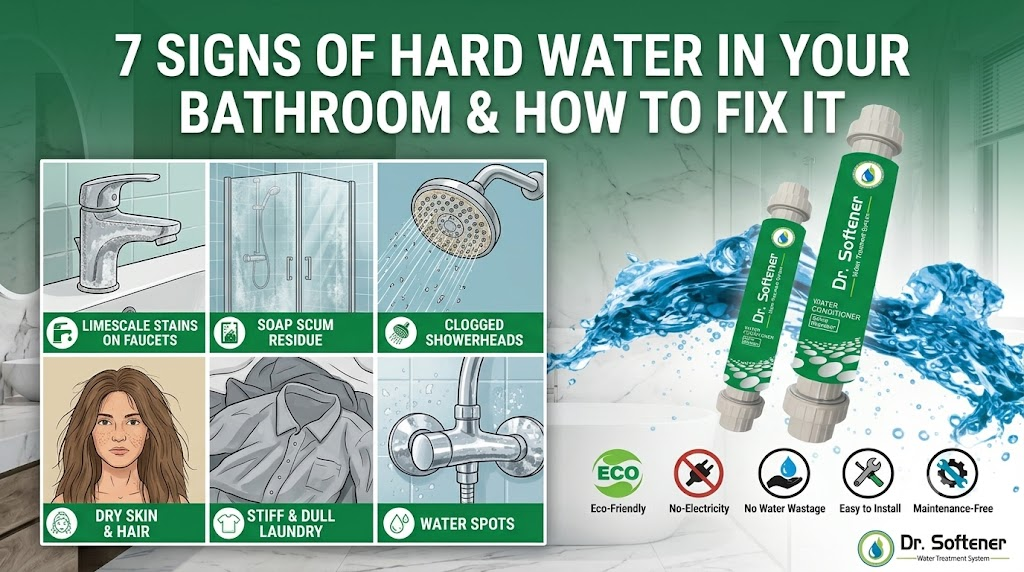
Here are 7 common signs of hard water in your bathroom, how to identify them and what you can do to manage the problem.
1. White or Chalky Scale on Bathroom Taps
One of the clearest signs of hard water is a white or chalky layer around:
- Taps
- Faucets
- Shower fittings
- Metal joints
- Water outlets
When hard water dries, some dissolved minerals remain on the surface as deposits.
If you clean these marks and they return quickly, the incoming water may be contributing to the problem.
How can you fix it?
Cleaning removes the scale that is already present, but it does not change the water causing it.
If scale keeps returning, treating the incoming bathroom water can be a more practical long-term approach.
Chanson’s Dr. Softener Bathroom Water Softener is designed as a salt-free water-conditioning system. Its ceramic media is intended to help reduce the tendency of hardness minerals to form stubborn scale on bathroom fittings.
This can help make taps and other bathroom fixtures easier to maintain without conventional salt regeneration.
Explore: Bathroom Water Softener
2. Soap Scum on Shower Glass and Tiles
Another common sign is a cloudy or dull film on shower glass, tiles or tubs.
Calcium and magnesium in hard water can interact with soap and contribute to soap scum.
You may notice it on:
- Shower glass
- Bathroom tiles
- Bathtubs
- Washbasins
- Areas around taps
This residue can make surfaces look dirty even after regular cleaning.
How does water conditioning help?
Dr. Softener conditions the water before it reaches bathroom fittings.
It is important to understand that it is not a traditional ion-exchange softener that physically removes calcium and magnesium. Instead, it is designed to manage mineral behaviour and reduce scale-related problems.
That distinction is important when choosing a bathroom water treatment system.
3. Your Showerhead Keeps Getting Clogged
Take a close look at your showerhead.
Do some nozzles have white deposits around them? Does the spray become uneven over time?
Mineral buildup can collect around shower openings and restrict water flow.
You may notice:
- Uneven spray
- Partially blocked nozzles
- Reduced flow from some holes
- Frequent need for descaling
Low water pressure can also have other causes, so always inspect the showerhead and plumbing before assuming hard water is responsible.
How can Dr. Softener help?
Because Dr. Softener is installed on the incoming water line, it conditions water before it reaches the showerhead.
Its role is to reduce the tendency of minerals to form hard, adherent scale.
Instead of repeatedly cleaning a blocked showerhead, you are addressing the scale problem earlier in the water supply.
4. Soap and Shampoo Do Not Lather Easily
Do you need more soap or shampoo than expected to create a good lather?
Hardness minerals can interact with soap and reduce how effectively it foams.
You may notice:
- Soap taking longer to lather
- More shampoo being used
- Residue after bathing
- Soap scum forming on surrounding surfaces
Poor lather alone does not confirm hard water.
However, if it occurs along with white scale, showerhead deposits and cloudy glass, testing your water hardness is a good next step.
Will a bathroom water conditioner help?
A water conditioner can help manage mineral behaviour, but it should not be confused with ion-exchange softening.
Traditional water softeners physically remove calcium and magnesium.
Dr. Softener instead uses ceramic-media conditioning without conventional salt or chemical dosing.
If your priority is scale management with a low-maintenance, salt-free system, this type of solution may be suitable.
5. Water Spots Keep Returning on Shower Glass
Water spots are especially noticeable on clear shower partitions and darker bathroom tiles.
After droplets dry, you may see:
- White spots
- Cloudy patches
- Rings
- Mineral residue
Cleaning removes the marks that are already present, but the cycle can continue if the incoming water remains unchanged.
How can Dr. Softener help?
Dr. Softener conditions the incoming bathroom water before it reaches taps, showers and other surfaces.
It is designed to help reduce scale-related buildup, which may make bathroom surfaces easier to maintain over time.
For homeowners who frequently clean mineral marks from their bathroom, this approach addresses the water before deposits become a recurring maintenance issue.
6. Your Skin or Hair Feels Different After Showering
Some people report that their hair feels rough or difficult to manage after showering with hard water, while others notice tight or dry-feeling skin.
However, this sign should be interpreted carefully.
Hair and skin changes can also be influenced by:
- Hot water
- Weather
- Shampoo and soap
- Hair treatments
- Existing skin conditions
- Other water-quality factors
So, skin or hair changes should not be used alone to diagnose hard water.
Instead, look for a combination of signs such as visible scale, poor lather and recurring deposits.
A bathroom water-conditioning system may improve the overall bathing-water experience for some users, but it should not be presented as a treatment for skin or hair conditions.
7. You Have to Clean Your Bathroom Constantly
One of the biggest practical problems with hard water is repeated cleaning.
You remove scale from taps.
A few days later, the marks appear again.
You clean shower glass.
Cloudy spots return.
You descale the showerhead.
Mineral buildup develops again.
At this point, regular cleaning is treating the result, not the incoming water.
A more practical approach
If testing confirms hard water and your main concern is recurring scale, treating the incoming water can reduce the need to repeatedly deal with the same deposits.
Chanson’s Dr. Softener Bathroom Water Softener is designed specifically for bathroom use and uses ceramic media for water conditioning.
It is currently positioned as a salt-free, low-maintenance solution for scale management.
View: Chanson Bathroom Water Softener
Quick Checklist: Do You Have Hard Water in Your Bathroom?
Check whether you regularly notice:
- White scale on taps
- Scale around shower nozzles
- Cloudy marks on shower glass
- Soap scum on tiles
- Poor soap lather
- Clogged shower openings
- Frequent need for descaling
One sign alone does not confirm hard water.
But if several of these problems appear together, testing the water is a sensible next step.
Why Does Hard Water Cause Bathroom Scale?
Water hardness is mainly associated with dissolved calcium and magnesium.
These minerals naturally enter water as it passes through soil and rock.
When hard water reaches bathroom fixtures and later evaporates, some minerals remain behind and gradually form deposits.
The severity of scale can depend on:
- Water hardness level
- Water temperature
- Water source
- Frequency of use
- Plumbing conditions
- Cleaning habits
This is why two homes using different water sources can experience very different levels of scale buildup.
How to Test for Hard Water in Your Bathroom
Before choosing a water treatment system, follow these steps.
Step 1: Look for recurring scale
Inspect taps, showerheads, glass and tiles.
Step 2: Check soap performance
Notice whether soap struggles to lather and whether residue forms easily.
Step 3: Inspect the showerhead
Check whether the nozzles are becoming blocked or scaled.
Step 4: Test water hardness
Use a proper hardness test kit or professional water test.
A TDS reading alone does not directly tell you how much calcium and magnesium hardness is present, so a hardness-specific test is more useful.
How Can You Fix Hard Water Problems in Your Bathroom?
The right solution depends on what you want to achieve.
For existing deposits: Clean and descale
- Regular cleaning can remove scale already present on taps, tiles, glass and showerheads.
- Always use a cleaner that is suitable for the surface.
- Remember:
- Cleaning removes scale. It does not change the incoming water.
For specific contaminants: Use the right shower filter
- Some shower filters are designed to reduce chlorine, sediment or other contaminants.
- However, not every shower filter removes calcium and magnesium.
- Always check what the product is specifically designed to reduce.
For actual hardness removal: Use ion exchange
- Traditional ion-exchange water softeners physically remove calcium and magnesium.
- They generally use resin and require periodic salt regeneration.
- This option is more suitable when the goal is a measurable reduction in water hardness.
For scale management: Consider water conditioning
- If your main concern is recurring bathroom scale rather than removing calcium and magnesium, a water conditioner may be more suitable.
This is where Chanson Dr. Softener fits.
How Chanson Dr. Softener Helps With Bathroom Hard-Water Problems
Dr. Softener is designed to condition incoming bathroom water and help manage hardness-related scale.
The key point is that Dr. Softener manages hardness-related scale rather than physically removing calcium and magnesium.
That makes it different from a traditional ion-exchange water softener.
Why Choose Chanson Dr. Softener for a Bathroom?
For homeowners mainly concerned about recurring bathroom scale, the system offers several practical features:
- Salt-free operation
- No conventional chemical dosing
- Ceramic-media water conditioning
- No regular salt regeneration
- Designed for scale management
- 5-year limited guarantee
- Bathroom-focused installation
If you want calcium and magnesium physically removed, an ion-exchange softener may be more appropriate.
If your goal is low-maintenance scale management, Dr. Softener can be considered as a bathroom-specific conditioning option.
Frequently Asked Questions
Q: What are the common signs of hard water in a bathroom?
White scale, soap scum, recurring water spots, poor soap lather and showerhead deposits are some of the most common signs.
Q: Does hard water damage bathroom fittings?
Mineral scale can build up on taps, showerheads and other fittings, making them harder to clean and maintain.
Q: Does Dr. Softener remove calcium and magnesium?
No. It is designed as a water conditioner that manages mineral behaviour rather than physically removing hardness minerals through ion exchange.
Q: Does Chanson Dr. Softener require salt?
It is designed as a salt-free conditioning system and does not rely on conventional salt regeneration.
Q: Should I test my water before buying a softener?
Yes. Testing helps confirm whether the problem is hardness, iron, high TDS or another water-quality issue.
Final Thoughts
The biggest sign of a hard-water problem is often not the first white mark on your tap.
It is when the mark keeps coming back.
Recurring scale, soap scum, clogged showerheads and water spots can increase bathroom cleaning and maintenance.
Start by testing your water and identifying what problem you actually need to solve.
For measurable hardness reduction, traditional ion-exchange softening may be suitable.
For homeowners mainly concerned about bathroom scale management without conventional salt regeneration, Chanson Dr. Softener provides a ceramic-media water-conditioning option designed for this type of application.
Explore: Water Softener for Bathroom in India
Latest Blog
-
27 Oct 2026
7 Signs of Hard Water in Your Bathroom and How to Fix It -
21 Sep 2026
Is Your Water Ionizer Truly Medical Grade? (ISO 13485 & FDA Explained) -
14 Sep 2026
The Truth About Water Ionizer Prices: MLM Markups vs. Direct-to-Consumer -
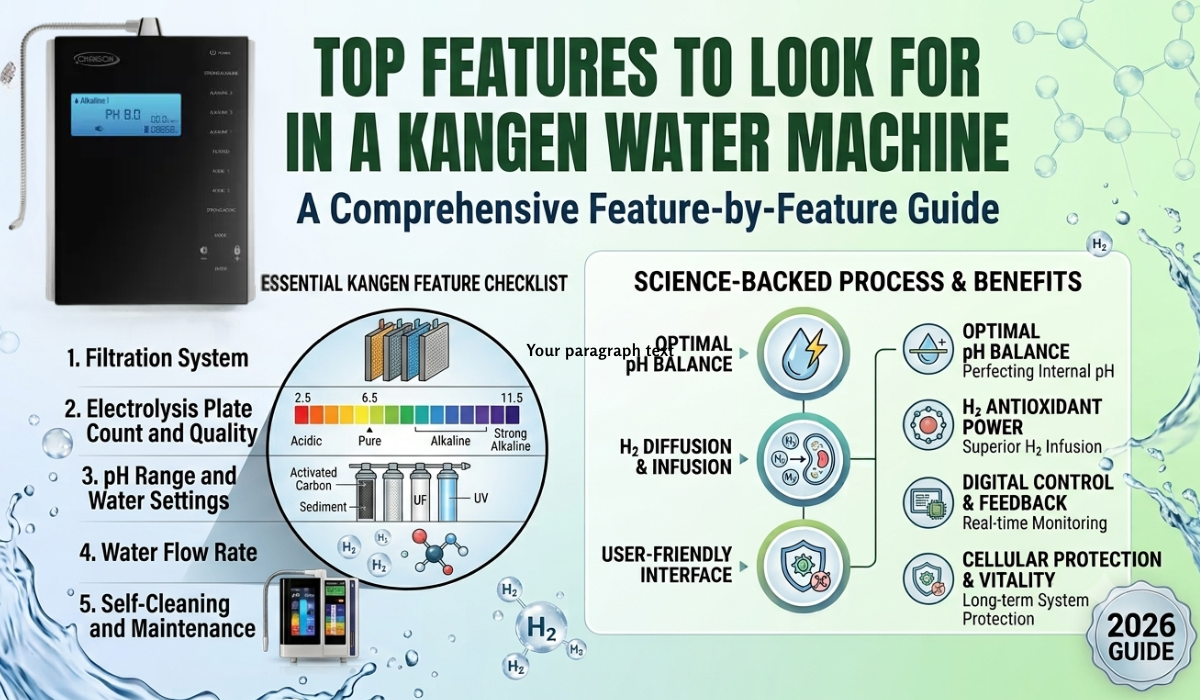
29 Aug 2026
Top Features to Look for in a Kangen Water Machine -
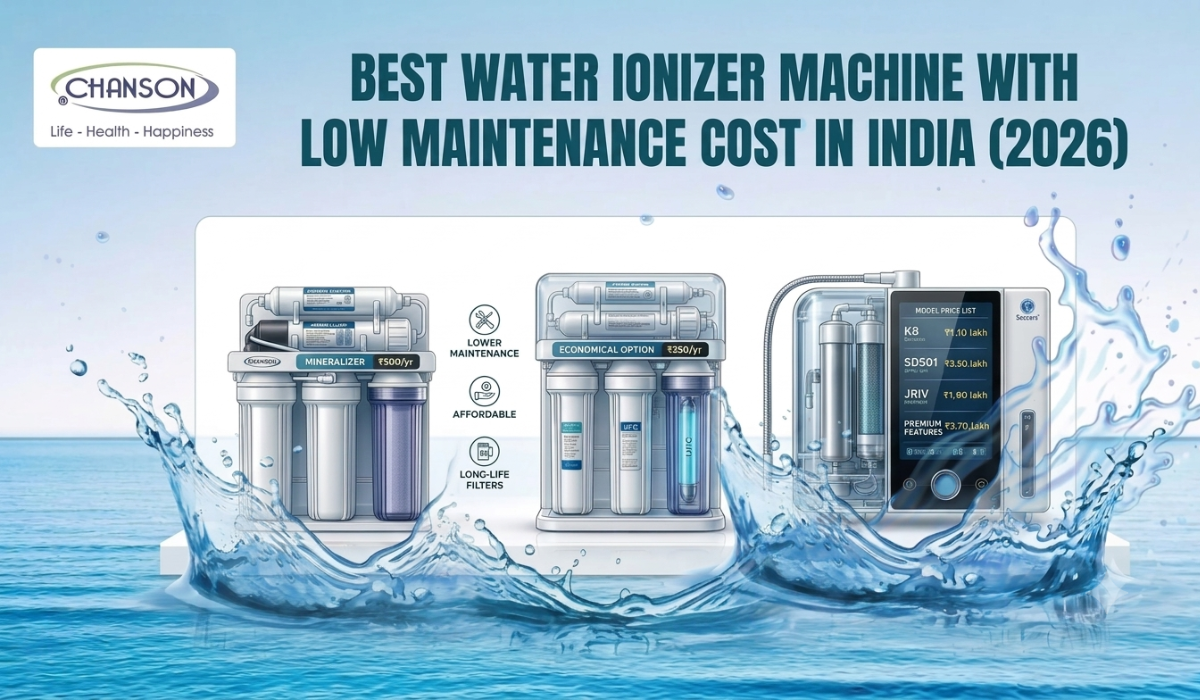
16 Aug 2026
Best Water Ionizers With Low Maintenance Cost in India 2026 -
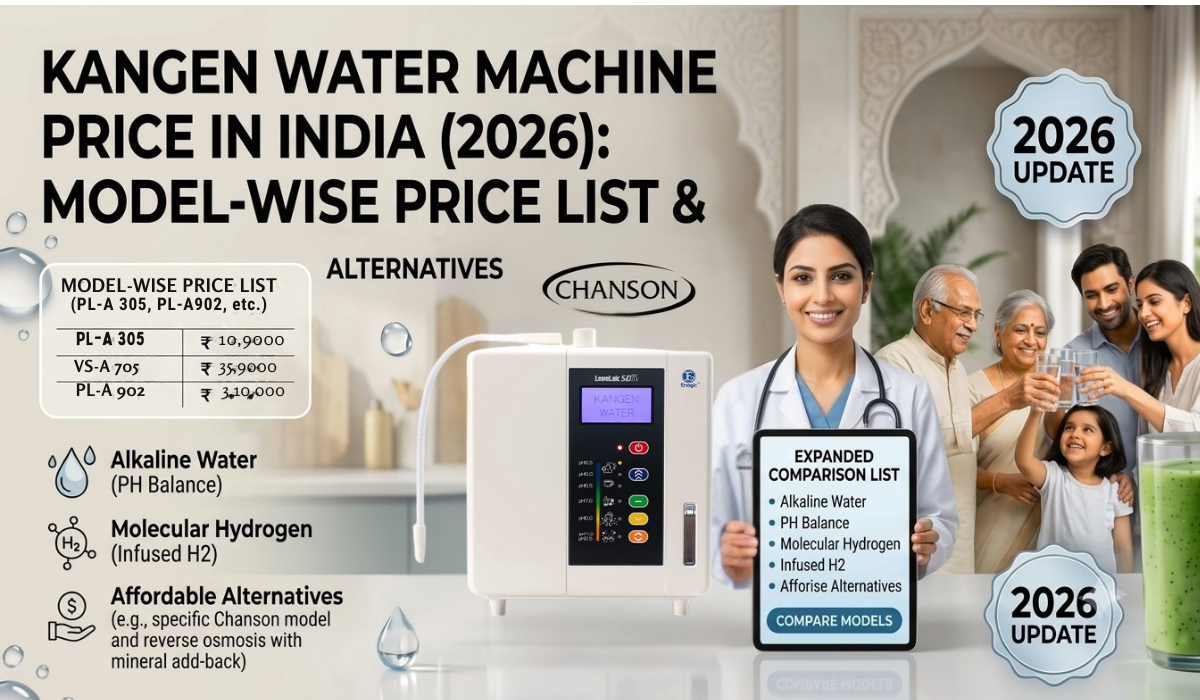
04 Jul 2026
Kangen Water Machine Price in India (2026): Model-Wise Price List, Features & Affordable Alternatives -
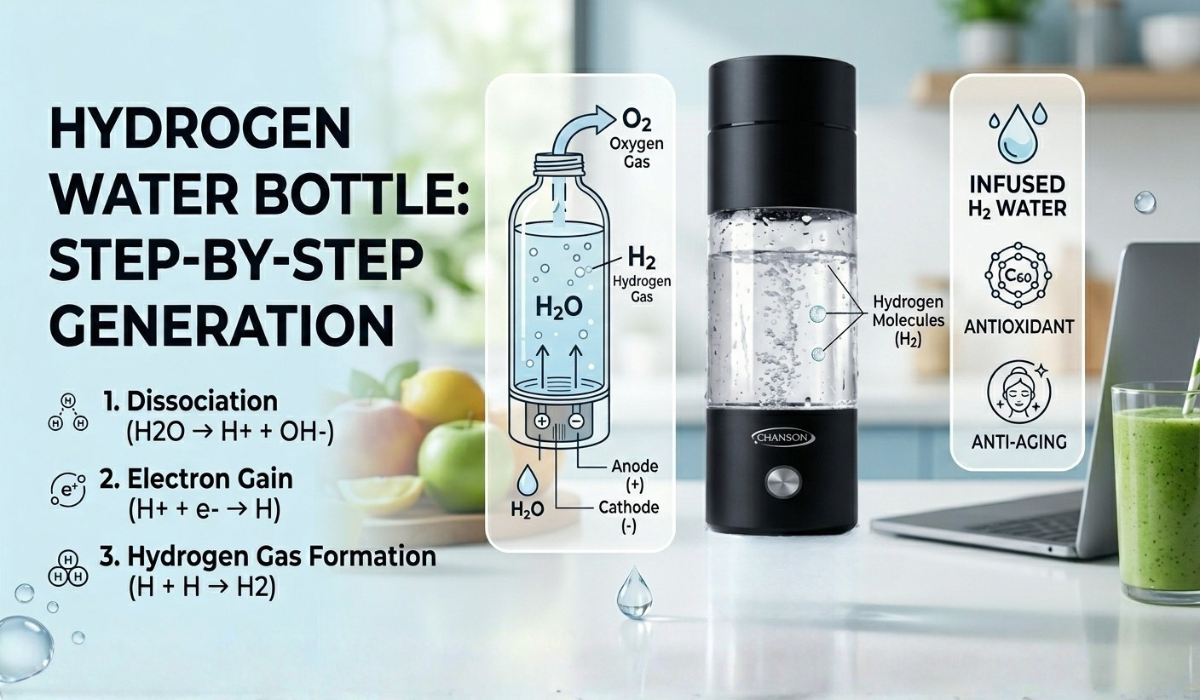
20 Jun 2026
How Does a Hydrogen Water Bottle Generator Work? A Complete Beginner's Guide

All Rights Reserved. © 2019-2026, Centrepoint Lifestyle Products Pvt Ltd.
