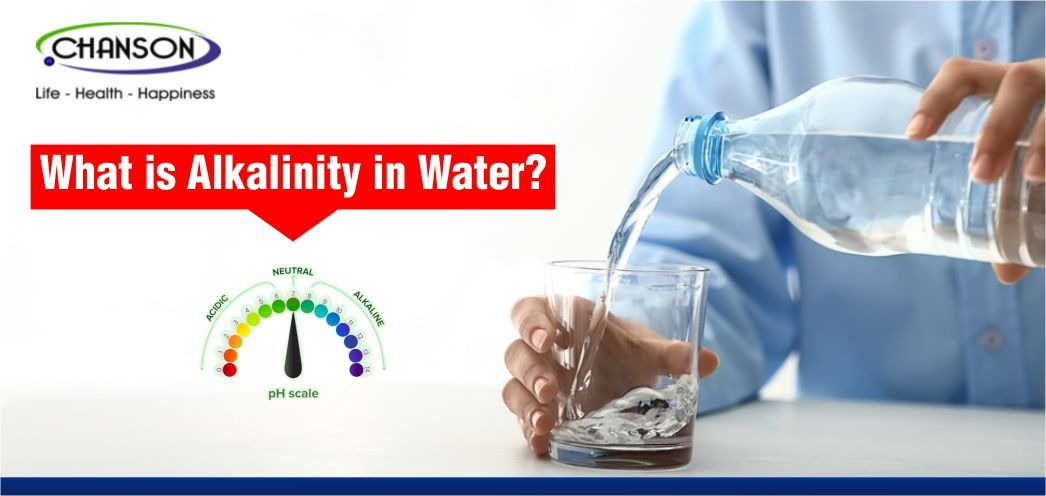
Learn about alkalinity in water with our guide! Discover its impact on water quality, health, and the environment. Get tips on testing and managing alkalinity effectively.
Alkalinity in water is a crucial concept that often goes unnoticed by the average consumer. However, understanding what alkalinity in water means and its significance can lead to better decisions regarding water quality, health, and environmental stewardship. Alkalinity refers to the capacity of water to neutralize acids, which is essential for maintaining a stable pH level. This stability is vital for aquatic life, the safety of drinking water, and even the longevity of plumbing systems. In this comprehensive guide, we'll delve into what alkalinity in water is, why it's important, how it's measured, and much more.

2. What is Alkalinity in Water?
Defining Alkalinity in Water
Alkalinity in water is defined as the water's ability to resist changes in pH by neutralizing acids. This buffering capacity is primarily due to the presence of bicarbonates, carbonates, and hydroxides in the water. These substances act as a chemical shield, preventing drastic pH fluctuations that could otherwise harm aquatic environments and make water unsafe for consumption.
Chemically, alkaline water typically contains a higher concentration of bicarbonates (HCO₃⁻), carbonates (CO₃²⁻), and sometimes hydroxides (OH⁻). These ions contribute to the water's total alkalinity, which is measured in milligrams per liter (mg/L) or parts per million (ppm). The higher the concentration of these ions, the greater the water's alkalinity, and consequently, its ability to neutralize acidic substances.
3. Why is Alkalinity Important in Water?
The Importance of Alkalinity in Water Quality
Alkalinity plays a crucial role in maintaining the quality of water, both in natural bodies of water and in water used for drinking. One of the primary functions of alkalinity is to act as a buffer against rapid pH changes. In natural water bodies, such as rivers, lakes, and oceans, this buffering action is essential for the survival of aquatic life. Many aquatic organisms are sensitive to changes in pH, and a stable environment is necessary for their growth and reproduction.
In drinking water, alkalinity helps to maintain a consistent pH level, which is crucial for preventing corrosion in pipes and plumbing systems. When water is too acidic, it can corrode pipes, leading to the leaching of harmful metals such as lead and copper into the water supply. Alkaline water helps to prevent this by neutralizing acids that could otherwise cause damage. Additionally, the taste and safety of drinking water are preserved when the alkalinity is within the appropriate range.
4. How is Alkalinity in Water Measured?
Methods to Measure Alkalinity in Water
Alkalinity in water is measured using various methods, with titration being one of the most common. In titration, a known concentration of acid is added to a water sample until the pH changes to a specific endpoint, usually around 4.5. The amount of acid required to reach this point indicates the water's alkalinity, which is then expressed in mg/L or ppm.
Another method to measure alkalinity is through digital meters, which provide quick and accurate readings of the water's alkalinity levels. These meters often use electrodes to detect changes in the water's pH as acid is added. The results are displayed digitally, making it easy to monitor and adjust alkalinity levels as needed.
Understanding the units of measurement is also important. Alkalinity is typically measured in mg/L or ppm, with 1 mg/L being equivalent to 1 ppm. The ideal alkalinity range for drinking water is generally between 20-200 mg/L, depending on the source and purpose of the water.
5. Factors Affecting Alkalinity in Water
What Influences Alkalinity in Water?
Several factors can influence the alkalinity of water, both natural and human-induced. Geological formations play a significant role in determining the alkalinity of natural water bodies. For instance, water that flows through limestone-rich areas tends to have higher alkalinity due to the dissolution of calcium carbonate (CaCO₃), a major component of limestone.
Pollution and human activities can also impact water alkalinity. Industrial waste, agricultural runoff, and wastewater discharge can introduce substances that alter the water's chemical composition, either increasing or decreasing its alkalinity. Water treatment processes, such as the addition of lime or other alkaline substances, are often used to adjust alkalinity levels to meet specific water quality standards.
6. Health Implications of Alkalinity in Drinking Water
Alkalinity in Water and Its Impact on Health
The alkalinity of drinking water can have both positive and negative health implications, depending on its levels. Water with moderate alkalinity is generally considered safe and may offer health benefits by neutralizing excess acidity in the body. Some studies suggest that drinking alkaline water can help balance the body's pH, reduce acid reflux, and improve hydration.
However, water with excessively high alkalinity may have a bitter taste and could cause digestive issues in some individuals. Conversely, water with low alkalinity may be more acidic, potentially leading to corrosion in pipes and the leaching of harmful metals, which could pose health risks.
It's important to maintain a balanced alkalinity level in drinking water to ensure it is both safe and beneficial for health.
7. How to Adjust Alkalinity in Water
Methods to Increase or Decrease Alkalinity in Water
Adjusting the alkalinity of water can be necessary for various applications, from drinking water to gardening and aquarium maintenance. To increase alkalinity, substances like lime (calcium carbonate) or baking soda (sodium bicarbonate) can be added to the water. These substances increase the concentration of bicarbonates and carbonates, raising the water's buffering capacity.
To decrease alkalinity, acidic substances such as muriatic acid or sulfuric acid can be used. These acids react with the bicarbonates and carbonates in the water, reducing their concentration and lowering the alkalinity.
It's important to monitor alkalinity levels regularly, especially when making adjustments, to ensure that the water remains within the desired range for its intended use.
8. Common Myths and Facts About Alkalinity in Water
Debunking Myths Around Alkalinity in Water
There are several myths surrounding alkalinity in water, and it's important to separate fact from fiction. One common misconception is that high alkalinity automatically makes water healthier. While moderate alkalinity can have health benefits, excessively high levels can lead to adverse effects, such as digestive discomfort and an unpleasant taste.
Another myth is that alkaline water can cure diseases or significantly alter the body's pH. While alkaline water can help balance acidity, it is not a miracle cure and should not be relied upon as a sole treatment for health conditions.
The truth is that alkalinity in water is just one aspect of water quality, and it should be considered in conjunction with other factors, such as pH, mineral content, and overall water purity, to ensure that water is safe and beneficial for consumption.
Understanding alkalinity in water is essential for ensuring the quality and safety of the water we use daily. By knowing what alkalinity is, why it matters, and how to manage it, you can make informed decisions that benefit your health and the environment.
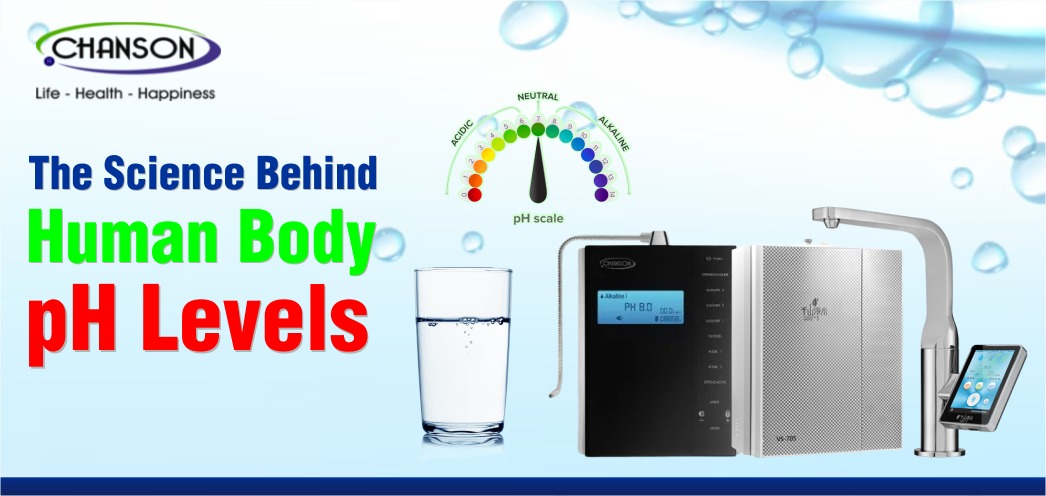
Understanding human body pH levels is crucial for maintaining health. This guide explores what pH levels are, how the body regulates them, factors affecting pH, and tips for keeping your pH balanced.

Understanding pH levels is important because it helps us know how our bodies work and stay healthy. pH measures how acidic or alkaline something is, on a scale from 0 to 14. A pH of 7 is neutral, below 7 is acidic, and above 7 is alkaline. Our bodies need to keep a slightly alkaline pH level, usually around 7.4, for everything to work properly. This guide will explain what pH levels are, how our bodies maintain them, what affects them, and why it's important to keep them balanced. We’ll also share tips on how to monitor and maintain a healthy pH level.
1. What is the pH Level of the Human Body?
The pH level of our bodies is a measure of how acidic or alkaline we are. Our body generally maintains a pH level of about 7.4, which is slightly alkaline. This balance is crucial because many of the body’s functions, like digestion, breathing, and cell activity, depend on it.
The pH scale runs from 0 to 14. A pH of 7 is neutral—neither acidic nor alkaline. Anything below 7 is acidic, and anything above 7 is alkaline. Our bodies aim to stay slightly alkaline because that’s the environment where our cells and organs function best. If our pH levels go too far in either direction, it can cause health problems.
2. How the Human Body Maintains pH Balance ?
Our bodies have built-in systems to keep pH levels balanced. These systems involve our kidneys, lungs, and special chemicals called buffers.
● Kidneys:- The kidneys help control pH by removing acids through urine. They can also keep or get rid of substances called bicarbonate, which helps neutralize acids in the body. This process is essential for preventing the body from becoming too acidic.
● Lungs: - The lungs help regulate pH by controlling the amount of carbon dioxide (CO2) in our blood. CO2 can mix with water to form an acid, so by breathing out CO2, our lungs help keep the body from becoming too acidic.
● Buffers: - Buffers are chemicals in our blood that help prevent sudden changes in pH. They work by soaking up excess acids or bases, keeping our pH levels stable.
All these systems work together to maintain homeostasis, which is the body’s way of keeping everything in balance, including pH levels.
3. Factors Affecting Human Body pH Levels ?
Several things can influence our body’s pH levels, including what we eat, our lifestyle, and certain medical conditions.
4. The Impact of Imbalanced pH Levels on Health
When our body’s pH level gets too far out of balance, it can cause health problems. There are two main types of pH imbalances: acidosis and alkalosis.
● Consequences of Low Human Body pH Level (Acidosis): - Acidosis happens when the body becomes too acidic, with a pH below 7.35. Symptoms of acidosis can include feeling tired, short of breath, confused, and in severe cases, it can lead to shock or coma. Over time, acidosis can lead to problems like weak bones (because the body pulls calcium from bones to neutralize acid) and kidney stones. It can also weaken the immune system, making it easier to get sick.
● Consequences of High Human Body pH Level (Alkalosis):- Alkalosis happens when the body becomes too alkaline, with a pH above 7.45. Symptoms of alkalosis can include muscle twitching, shaking hands, nausea, and dizziness. Severe alkalosis can lead to low potassium levels, causing irregular heartbeats and muscle weakness. It can also make it harder for the body to absorb certain nutrients, leading to deficiencies.
5. Measuring and Monitoring Human Body pH Levels
Keeping track of your pH levels can help you stay healthy. There are a few ways to measure pH levels, including blood tests, urine tests, and saliva tests.
● Methods for Testing pH Levels: - Blood tests are the most accurate way to measure pH, but they’re usually done in a lab. Urine and saliva tests are easier to do at home and can give you a general idea of your pH level. However, they may not be as precise as blood tests.
● Interpreting pH Level Results: - Understanding your pH results can help you know if your body is in balance. If your pH level is within the normal range, it means your body is maintaining a good balance. If your pH is too low (acidic) or too high (alkaline), it may be a sign that something is off, and you might need to adjust your diet or lifestyle.
6. How to Maintain a Healthy Human Body pH Level
Maintaining a healthy pH balance is possible with a few simple changes to your diet and lifestyle.
● Dietary Adjustments for Optimal Human Body pH Level:- To keep your pH levels in check, try to eat more alkaline foods like green vegetables, fruits, nuts, and seeds. These foods can help neutralize acids and support your body’s pH balance. It’s also important to limit acidic foods like red meat, processed foods, caffeine, and alcohol.
● Lifestyle Changes to Support pH Balance: - Regular exercise, staying hydrated, and managing stress can all help maintain a healthy pH level. Exercise increases oxygen in the body, which helps neutralize acids. Drinking plenty of water helps flush out acids, and managing stress can prevent the production of acid-forming hormones.
In conclusion, understanding and maintaining your body’s pH balance is key to good health. By making smart choices about what you eat and h
ow you live, you can help your body stay in balance and avoid health problems. Regularly checking your pH levels can also help you catch any imbalances early, so you can take action before they lead to more serious issues. Remember, a balanced pH is essential for a healthy, functioning body.
Stay on top of your health with precise pH monitoring! Ensure your body stays balanced by getting a reliable pH meter today. Whether you're checking your body's pH or testing your water, our pH meters offer accuracy you can trust. Don't wait - take control of your well-being now. Order your pH meter and start living healthier!
Discover the ultimate guide to choosing the right water softener size for your needs. It's not just about capacity; it's about efficiency and impact!

What Size Water Softener Do I Need?
Choosing the right size water softener is crucial for ensuring optimal water quality and efficiency in your home. Selecting a unit that's too small can lead to inadequate softening, while an oversized unit can result in unnecessary expenses and maintenance issues. This guide will help you navigate the process of determining the appropriate size water softener for your household.
Water softeners remove minerals like calcium and magnesium from your water supply, preventing scale buildup in your plumbing and appliances. The benefits of using a water softener include extended appliance life, improved soap efficiency, and softer skin and hair.
Learn about various water contaminants, including biological, chemical, and heavy metals, their sources, and health impacts, and the importance of clean water for safety.

What Are the Types of Water Contaminants?
Water contamination is a growing concern worldwide, posing significant risks to health and safety. Understanding the various types of water contaminants is crucial in safeguarding our health and ensuring the purity of our water sources. This blog post delves into the different types of water contaminants, their sources, and their impacts on health.
1. Biological Contaminants
Definition and Examples
Biological contaminants are living organisms that can cause diseases. They include bacteria, viruses, and parasites.
● Bacteria: E. coli, Legionella
● Viruses: Norovirus, Hepatitis A
● Parasites: Giardia, Cryptosporidium
Sources
Biological contaminants typically enter water sources through:
● Sewage overflows
● Agricultural runoff
● Wildlife
Health Impacts
These contaminants can lead to various health issues, such as:
● Gastrointestinal illnesses
● Infections
2. Chemical Contaminants
Definition and Examples
Chemical contaminants include substances used in agriculture and industry, as well as household chemicals.
● Pesticides: Atrazine, DDT
● Herbicides: Glyphosate
● Industrial chemicals: PCBs, Dioxins
Sources
Chemical contaminants often originate from:
● Agricultural runoff
● Industrial discharges
● Household waste
Health Impacts
Exposure to chemical contaminants can result in:
● Hormonal disruptions
● Cancer risks
● Neurological disorders
3. Heavy Metals
Definition and Examples
Heavy metals are metallic elements that can be toxic even at low concentrations.
● Lead
● Mercury
● Arsenic
Sources
Heavy metals enter the water through:
● Corrosion of plumbing systems
● Industrial processes
● Natural deposits
Health Impacts
Health issues associated with heavy metals include:
● Neurological damage
● Kidney disease
● Developmental issues in children
4. Organic Contaminants
Definition and Examples
Organic contaminants are carbon-based chemicals, often from industrial or household sources.
● Volatile Organic Compounds (VOCs): Benzene, Toluene
● Polycyclic Aromatic Hydrocarbons (PAHs)
Sources
These contaminants typically come from:
● Industrial solvents
● Fuel spills
● Consumer products
Health Impacts
Exposure can lead to:
● Respiratory issues
● Liver damage
● Cancer
5. Radiological Contaminants
Definition and Examples
Radiological contaminants are radioactive substances.
● Uranium
● Radium
● Radon
Sources
They originate from:
● Natural radioactive decay
● Mining activities
Health Impacts
Health risks include:
● Increased cancer risk
● Bone damage
6. Physical Contaminants
Definition and Examples
Physical contaminants are particles that affect the physical properties of water.
● Sediments
● Microplastics
● Microfibers
Sources
These contaminants are commonly from:
● Erosion
● Industrial discharge
● Laundry effluent
Health Impacts
Physical contaminants can cause:
● Clogging of water systems
● Potential physical harm
7. Emerging Contaminants
Definition and Examples
Emerging contaminants are newly recognized or recently detected in water.
● Pharmaceuticals: Antibiotics, Hormones
● Personal Care Products: Sunscreens, Fragrances
Sources
These contaminants often come from:
● Improper disposal of medications
● Everyday use of personal care products
Health Impacts
Potential health effects include:
● Antimicrobial resistance
● Endocrine disruption
Understanding the different types of water contaminants is essential for protecting our health and ensuring the safety of our water supplies. Regular water testing and purification can help mitigate the risks posed by these contaminants. Be proactive in ensuring your water quality to safeguard your health and well-being.
At Chanson Water, we are committed to providing you with the highest quality water solutions to keep you and your family safe. Our range of advanced water ionizers not only purify your water but also enhances its health benefits by balancing pH levels and removing harmful contaminants.
Explore our selection of water ionizers today and take the first step towards cleaner, healthier water. Visit our website or contact us to learn more about how Chanson Water can help you ensure the purity of your drinking water. Don't wait—protect your health and invest in your well-being with Chanson Water's innovative water ionizers.
Discover 10 actionable tips to slow down aging with alkaline water. Learn practical ways to integrate it into your routine for youthful, vibrant health.

A water softener removes sulfur smell by replacing minerals like calcium and magnesium with sodium through ion exchange, eliminating the odor.

White stains on taps that never go away. Soap that barely lathers. Dry skin after every shower. Hair that feels rough and lifeless. If this sounds familiar, hard water could be the hidden problem affecting your home every single day.
In many Indian cities like Delhi, Bengaluru, Hyderabad, Chennai, Pune, and Noida, water hardness levels often reach 300–600 ppm — much higher than the recommended BIS limit. And if your home depends on borewell water, the problem can become even worse.
Over time, hard water doesn’t just affect your skin and hair. It can damage pipes, reduce appliance life, increase electricity bills, and leave stubborn mineral buildup throughout your home.
The good news? Softening hard water at home is easier than you might think. Keep reading to discover 10 simple and effective methods to reduce water hardness naturally.
What Is Hard Water?
Before learning how to soften hard water, it’s important to understand what hard water actually is. Hard water is water that contains high levels of dissolved minerals, mainly calcium and magnesium. When rainwater passes through underground rocks like limestone and chalk, it absorbs these minerals naturally. By the time the water reaches your tap or borewell, it can already contain a high mineral content.
Water hardness is measured in ppm (parts per million):
Most Indian homes using borewell water fall in the hard to very hard range.
There are two types of hard water:
Temporary Hardness is caused by dissolved calcium and magnesium bicarbonates. This type can be removed by simple methods like boiling.
Permanent Hardness is caused by calcium and magnesium sulfates and chlorides. This requires more advanced treatment — chemical methods, ion exchange, or a dedicated water softener for home use.
Quick Test: If your soap doesn’t lather properly, you notice white deposits on taps, or your geyser makes unusual noises, your home may have hard water. These are common signs that you may need to treat hard water before it starts damaging your skin, pipes, and appliances. For an accurate reading, get your water tested at a local lab or use a TDS/hardness test kit at home.
Read More About: What is Hard Water? Understanding Its Impact and Solutions
10 Natural and Effective Ways to Soften Hard Water at Home Naturally
If you're wondering how to convert hard water to soft water, the good news is that there are several affordable solutions available for Indian homes. Some methods help reduce water hardness temporarily, while others provide a long-term solution for bathing, laundry, and household use.
1. Boiling — A Simple Way to Convert Hard Water to Soft Water Naturally
Best for: Drinking and cooking water | Works on: Temporary hardness only
Boiling is the most accessible and zero-cost method to soften hard water. When water is heated to 100°C, the dissolved calcium and magnesium bicarbonates precipitate as solid crystals that settle to the bottom of the vessel.
How to do it:
Bring a large vessel of water to a rolling boil.
Let it cool for 30–60 minutes undisturbed.
Carefully pour the water into a clean storage container, leaving the mineral sediment behind at the bottom.
Limitations: Boiling only removes temporary hardness. It has no effect on permanent hardness caused by sulfate and chloride salts. It's also energy-intensive and impractical for large quantities or for bathing water.
Best use case in Indian homes: Suitable for softening water for cooking and drinking in areas where municipal supply is the primary source.
2. Baking Soda (Sodium Bicarbonate) — The Budget-Friendly Natural Water Softener
Best for: Bathing, laundry | Works on: Temporary hardness
Baking soda raises the pH of water and reacts with calcium and magnesium ions, reducing their ability to cause scaling and skin irritation. It's a well-known natural water softener used across Indian households.
How to use:
For bathing: Dissolve 2–3 tablespoons of baking soda in a bucket of water before bathing.
For laundry: Add ½ cup of baking soda along with your regular detergent per wash cycle.
For cooking water: Add ¼ teaspoon per litre and let it rest for an hour.
Caution: Overuse can make water excessively alkaline, which may cause skin irritation. Use moderately and avoid using baking soda-softened water for drinking in large quantities.
3. White Vinegar — Dissolves Limescale and Mineral Deposits
Best for: Cleaning appliances, descaling | Works on: Limescale removal from surfaces
White vinegar is naturally acidic (acetic acid) and effectively dissolves calcium carbonate deposits — the chalky white crust you see on taps, showerheads, and kettle interiors.
How to use:
For showerheads and taps: Soak in equal parts white vinegar and water for 30–60 minutes. The limescale loosens and wipes away easily.
For washing machines: Add 1 cup of white vinegar to the rinse cycle to reduce mineral buildup and soften clothes.
For kettles: Fill halfway with a vinegar-water solution, boil, let sit for 30 minutes, then rinse thoroughly.
Limitation: Vinegar is primarily a limescale remover, not a true water softener. It won't change the mineral content of incoming water but is excellent for maintaining appliances and surfaces.
4. Lemon Juice — A Natural Acid That Neutralises Minerals
Best for: Hair rinse, drinking water, light household cleaning | Works on: Temporary hardness
Like vinegar, lemon juice contains citric acid, which neutralises calcium and magnesium ions. It has the added benefit of leaving a fresh scent and is especially popular as a final hair rinse to reduce the impact of hard water on hair.
How to use:
For drinking water: Squeeze half a lemon into a litre of water and let it sit for an hour before consuming.
For hair: After shampooing, rinse hair with a mixture of 2 tablespoons lemon juice in 500 ml of water to reduce mineral buildup on hair shafts.
For light cleaning: Apply directly to tap fixtures and tiles with limescale buildup.
Limitation: Like vinegar, lemon juice won't permanently soften water. It addresses surface-level mineral effects and works best as part of a broader hard water management routine.
5. Washing Soda (Sodium Carbonate) — Effective for Laundry
Best for: Laundry and household cleaning | Works on: Both temporary and permanent hardness
Washing soda is more powerful than baking soda when it comes to softening water for laundry. It reacts with dissolved calcium and magnesium, converting them into insoluble compounds that wash away rather than depositing on fabrics.
How to use:
Add ½ cup of washing soda per load of laundry along with your regular detergent.
It improves the effectiveness of detergents, meaning you'll need less soap to get clothes clean.
Caution: Washing soda is a strong alkali. Always wear gloves when handling it. Do not use it for drinking water or food preparation.
6. Installing a Shower Head Filter to Convert Hard Water to Soft Water for Bathing
Best for: Bathing | Works on: Reducing chlorine, sediment, and partial hardness
A shower head filter is one of the most practical and affordable solutions for Indian households facing hard water-related skin and hair problems. These filters are fitted directly onto your existing shower pipe — no plumber required in most cases — and use a combination of KDF media, activated carbon, and calcium sulphite to reduce chlorine, sediment, and the effects of mineral content.
What to look for:
Filters with KDF (Kinetic Degradation Fluxion) media — effective for Indian borewell water
Compatibility with your existing shower arm (most use standard ½-inch fittings)
Cartridge replacement interval: typically every 3–6 months based on usage
Why it matters for Indian homes: Dermatologists increasingly recommend shower filters for patients experiencing chronic hair fall, dandruff, and dry skin, particularly in cities like Bengaluru, Hyderabad, and Pune where borewell water hardness exceeds 300–500 ppm.
7. Water-Softening Pillow / Resin Sachets — Portable and Reusable
Best for: Overhead tanks, small storage tanks | Works on: Calcium and magnesium ions
Water-softening pillows or sachets contain ion-exchange resin beads that swap calcium and magnesium ions with sodium or potassium ions as water passes through. They are compact, portable, and require no installation — simply drop them into your overhead water tank.
How they work:
The resin beads attract and hold hardness-causing minerals.
Over time, the beads become saturated and must be regenerated using a salt solution, or the pillow replaced.
Best for: Independent houses with small to medium overhead tanks (up to 1,000–2,000 litres). This is an easy first step for households not yet ready to invest in a full-sized water softener for Apartments.
8. Using a Carbon Block Filter — Improves Taste and Reduces Chlorine
Best for: Drinking and kitchen use | Works on: Chlorine, organic compounds, light hardness effects
Carbon block filters (commonly part of under-counter or countertop filtration systems) are highly effective at removing chlorine, odour, and organic contaminants. While they don't directly remove calcium and magnesium, they improve overall water quality and reduce the compound effect of chlorine + hardness on skin and appliances.
How to use:
Install as a point-of-use filter under your kitchen sink or as a tap attachment.
Replace cartridges every 6 months or as per manufacturer guidelines.
Note: For hard water treatment specifically, carbon filters work best when combined with a dedicated hard water softener rather than as a standalone solution.
9. Magnetic Water Conditioner — Low-Maintenance, No Chemicals
Best for: Pipes and appliances | Works on: Altering mineral behaviour (not removing minerals)
Magnetic water conditioners are devices that clamp onto your water inlet pipe and use strong magnets to alter the electromagnetic properties of calcium and magnesium ions. This doesn't remove the minerals but changes how they behave — making them less likely to stick to pipes, appliance surfaces, and heating elements.
Pros:
No chemicals
No electricity required
No filter cartridges or maintenance
Easy to install on existing pipes
Cons:
Effectiveness is debated scientifically; results vary with water composition and flow rate
Does not change hardness measurement in ppm
Best used as a supplementary measure alongside other methods
Best use case: As a low-cost preventive measure for protecting pipes and geysers in areas with moderate hardness (120–250 ppm).
10. Whole-House Water Softener — The Best Way to Soften Hard Water Permanently
Best for: Entire household | Works on: Both temporary and permanent hardness completely
For households with water hardness above 200 ppm — which covers most borewell-dependent homes across India — the most effective and permanent solution is an ion exchange water softener. This is a tank-based system installed at the main water inlet point that replaces calcium and magnesium ions with sodium ions, delivering consistently soft water to every tap, shower, and appliance in the home.
How it works:
Hard water passes through a resin tank filled with negatively charged resin beads.
Calcium and magnesium ions are attracted to and held by the resin.
Sodium ions are released into the water in their place.
The result is soft water that flows through your entire home.
Periodically, the resin is regenerated using a salt (brine) solution to restore its capacity.
Why Indian households need this:
Borewell hardness regularly exceeds 400–600 ppm in cities like Bengaluru, Hyderabad, Nagpur, and Ahmedabad
Appliance life improves by 30–40% with soft water
Visible reduction in hair fall, skin dryness, and soap/detergent consumption
Prevents limescale in geysers, washing machines, and RO membranes
Read more: Best Water Softener for Home & Apartment – 2026 Buying Guide | Water Softener vs Water Filter – What's the Difference?
What are the Effects of Hard Water on Health and Your Home
Hard water may not always be harmful to drink, but it can create several everyday problems for both your health and your home. From dry skin and hair damage to clogged pipes and higher electricity bills, the effects of hard water slowly build up over time.
Here are some of the most common problems caused by hard water:
1. Dry Skin and Skin Irritation
Hard water contains high levels of calcium and magnesium that make it difficult for soap to rinse off completely. This leaves a thin mineral layer on your skin, causing dryness, itchiness, irritation, and a rough feeling after bathing.
People with sensitive skin, eczema, or allergies often notice the effects even more.
2. Hair Fall, Dandruff, and Rough Hair
The minerals in hard water can stick to your scalp and hair strands, making your hair dry, dull, and difficult to manage. Over time, this buildup may lead to increased hair fall, dandruff, split ends, and frizzy hair.
You may also notice that shampoo doesn’t lather properly, forcing you to use more product without getting a clean feel.
3. Mineral Buildup in Pipes and Appliances
One of the biggest problems with hard water is limescale buildup. White, chalky deposits slowly collect inside pipes, taps, geysers, washing machines, showerheads, and kitchen appliances.
This buildup reduces water flow, lowers appliance efficiency, and can shorten the lifespan of expensive household equipment.
4. Higher Electricity and Maintenance Costs
When minerals build up inside geysers and water heaters, the appliance needs more energy to heat water properly. As a result, your electricity bills can increase over time.
Hard water can also lead to frequent plumbing repairs, blocked pipes, and extra appliance maintenance costs.
5. Increased Soap and Detergent Usage
Hard water reacts with soap and prevents it from lathering effectively. This means you end up using more soap, shampoo, detergent, and cleaning products for everyday tasks like bathing, laundry, and dishwashing.
Over time, these extra costs add up significantly.
6. Stiff Clothes and Dull Fabrics
Minerals in hard water settle into fabric fibres during washing. This can make clothes feel rough, fade colours faster, and leave white marks on dark fabrics.
Towels may also lose their softness after repeated washing in hard water.
7. Possible Health Concerns from Excess Minerals
Hard water is generally considered safe for drinking and may even contain beneficial minerals like calcium and magnesium. However, extremely hard water may not suit everyone.
In some cases, people who are already prone to kidney stones or digestive sensitivity may experience discomfort from long-term consumption of water with very high mineral content.
Quick Comparison: Which Hard Water Solution Is Right for You?
Not every method works the same way. Some solutions help reduce water hardness temporarily, while others completely soften hard water for long-term household use.
Hard Water in Indian Cities: What the Numbers Say
India has a severe hard water problem that worsens each year as groundwater extraction increases and borewell dependency grows. Here's a snapshot:
Bengaluru: Borewell hardness typically 300–500+ ppm — among the highest in India
Delhi/NCR (Noida, Gurgaon): Municipal + borewell mix; hardness 200–450 ppm
Hyderabad: Varies by zone; suburban areas relying on borewell reach 300–500 ppm
Chennai: Seawater intrusion raises both TDS and hardness — dual-treatment often required
Pune: Borewell-dependent areas (Hadapsar, Pimpri-Chinchwad) reach 200–450 ppm
The BIS acceptable limit for hardness is 300 mg/L — yet these cities regularly exceed it. WHO recommends water below 200 ppm for daily household use.
Frequently Asked Questions
Q: How do I know if my home has hard water?
If your water leaves stains or causes dryness, it's a good idea to learn how to treat hard water before the problem becomes worse. The easiest signs are white deposits on taps, poor soap lather, dry skin after bathing, and hair fall. For a precise reading, purchase a hardness test kit (available online for ₹200–500) or get a water test done at a local lab.
Q: Can I drink softened water from an ion exchange softener?
Ion exchange water softeners add a small amount of sodium to the water while removing calcium and magnesium minerals. For most healthy adults, softened water is generally safe for everyday household use. However, people on low-sodium diets or those with kidney-related health concerns should consult a healthcare professional before drinking softened water regularly. Many homeowners prefer using softened water mainly for bathing, cleaning, laundry, and appliance protection.
Q: Does boiling water remove permanent hardness?
No. Boiling only removes temporary hardness (caused by bicarbonates). For permanent hardness caused by sulfates and chlorides, you need an ion exchange softener or chemical treatment.
Q: How often should I replace shower head filter cartridges?
Typically every 3–6 months depending on water usage and hardness level. In cities with very hard borewell water (400+ ppm), cartridges may need replacement every 2–3 months.
Final Thoughts: Which Method Should You Choose?
The right approach depends on your water hardness level and your goals:
For mild hardness and occasional use: Start with baking soda, lemon juice, or a shower head filter. These are affordable, require no installation, and address the most common daily pain points — skin dryness and hair fall.
For moderate hardness (150–300 ppm) with appliance concerns: Invest in a shower head filter + a water-softening pillow for your overhead tank. This combination protects both you and your appliances without major expenditure.
For high or very high hardness (300+ ppm), especially borewell water: A whole-house ion exchange water softener is the only truly effective long-term solution. Combined with an RO purifier for drinking, this setup gives your family complete protection — healthier skin and hair, longer-lasting appliances, and significant savings on soaps, detergents, and repair bills.
Explore further: What Is Hard Water and How Does It Affect Your Home? | Water Softener vs Water Filter – Which Do You Need?
Hard water is more than just a daily inconvenience — it can quietly damage your skin, hair, appliances, plumbing, and household budget over time. Whether you're looking for simple ways to soften water at home naturally or a permanent solution to convert hard water to soft water, taking action early can save you money and prevent long-term damage. Start with small solutions like baking soda or shower filters, and upgrade to a whole-house water softener if your water hardness levels are consistently high.
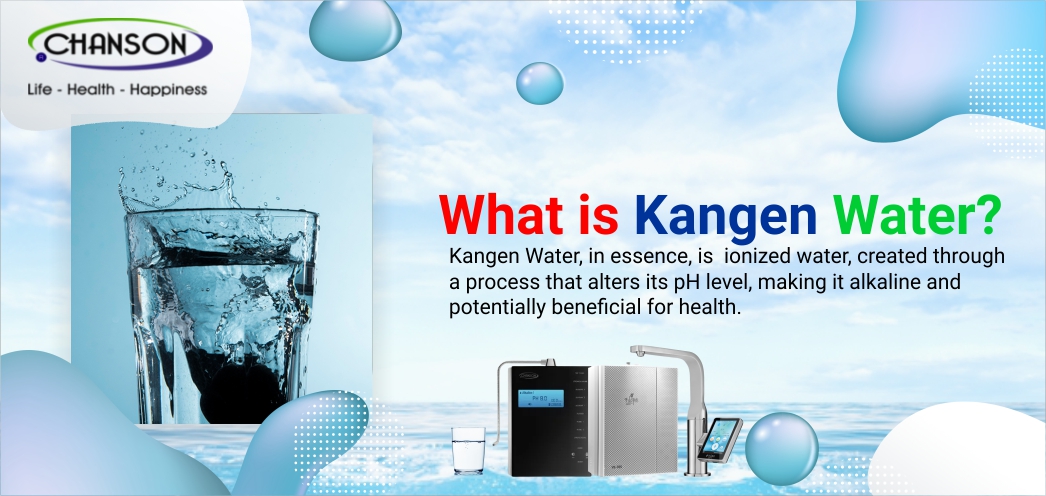
Table of Contents
What Is Kangen Water?
The Properties of Kangen Water
How Does a Kangen Water Machine Work?
The 5 Types of Kangen Water and Their Uses
Kangen Water Purifier Benefits for Daily Health
Best Kangen Water Machine — What to Look For
Kangen Water vs Regular Water vs Bottled Water
Why Chanson Water Is the Smarter Alternative
Frequently Asked Questions (FAQs)
Quick Answer: Kangen water is ionized alkaline water produced through electrolysis. A Kangen water machine converts tap water into alkaline water (pH 8.5–9.5) rich in antioxidants, used for drinking, cooking, skincare, and cleaning.
1. What Is Kangen Water?
Kangen water is ionized alkaline water produced by passing regular tap water through electrolysis inside a Kangen water machine. The result is water with a higher-than-neutral pH (typically 8.5 to 9.5), a negative Oxidation-Reduction Potential (ORP), and a high concentration of molecular hydrogen (H₂), properties that set it apart from ordinary drinking water.
The term "Kangen" is Japanese for "return to origin", restoring water to its purest natural state and "reduction", the water's ability to reduce oxidative stress through antioxidant activity. Originally developed in Japan for hospital use, it is today consumed by millions worldwide seeking better hydration and overall health.
2. The Properties of Kangen Water
What makes Kangen water different from regular filtered or bottled water? It comes down to four scientifically measurable properties, each one playing a distinct role in your health and daily use.

1. Hydrogen Rich
What it means: Kangen water contains a high concentration of Molecular Hydrogen (H₂) — the smallest and most cell-permeable molecule in existence.
Why it matters for you: Molecular hydrogen acts as a highly efficient antioxidant. Because H₂ molecules are so tiny, they diffuse rapidly across cell membranes - reaching areas of the body that larger antioxidant molecules simply cannot. Once inside, they neutralize harmful free radicals and suppress oxidative stress, which is linked to aging, inflammation, and a range of chronic conditions.
How Kangen water achieves this: Through the process of electrolysis inside a Kangen water machine, ordinary tap water is transformed into hydrogen-rich water on demand - fresh every time you use it.
Simple answer: Hydrogen-rich water = water packed with a natural, cell-penetrating antioxidant that protects your body from the inside out.
2. Antioxidant
What it means: Kangen water has active antioxidant properties, meaning it can neutralize oxidants (free radicals) in your body.
Why it matters for you: Every day, oxidation reactions inside your body produce free radicals — unstable molecules that damage cells, accelerate ageing, and contribute to disease. Antioxidants are your body's defence against this damage. They terminate these harmful reactions before they cause lasting harm.
Most people get antioxidants from food and supplements — but your water can be a powerful daily source too. It's not just about how much water you drink, but the quality of that water. Kangen water delivers antioxidant support with every sip, helping maintain the right balance between oxidants and antioxidants in your body.
Simple answer: Drinking antioxidant-rich Kangen water every day helps protect your cells from damage caused by free radicals — naturally, without supplements.
3. Alkaline
What it means: Kangen water has a pH above 7.0, making it alkaline rather than neutral or acidic.
Why it matters for you: The human body functions best at a blood pH of 7.365 — slightly alkaline. The pH scale runs from 0 to 14: 7.0 is neutral, anything below is acidic, and anything above is alkaline. Modern diets — heavy in processed foods, sugary drinks, and animal proteins — constantly push your body toward acidity, forcing it to work harder to maintain its ideal pH balance.
Drinking alkaline Kangen water (pH 8.5–9.5) helps support this balance daily, reducing the burden on your body's natural buffering systems and contributing to overall wellbeing.
Simple answer: Alkaline water helps your body maintain its natural pH balance — something your modern diet often works against.
4. Negative ORP (Oxidation-Reduction Potential)
What it means: ORP is a measurement of a substance's ability to either oxidize (cause damage) or reduce (protect and repair). Kangen water has a negative ORP - meaning it has antioxidizing potential.
Why it matters for you: Think of ORP like a battery charge for your water:
Positive ORP (high number) = oxidizing potential → better for outside the body (cleaning, sanitizing surfaces)
Negative ORP (low/negative number) = antioxidizing potential → ideal for drinking and internal consumption
Regular tap water and bottled water typically carry a positive ORP, meaning they are oxidizing — the opposite of what your body benefits from internally. Fresh Kangen water carries a negative ORP of -200 to -800 mV, making it one of the most antioxidant-rich beverages you can consume.
Just like pH, ORP is a key quality measurement for water — and most people have never even considered it when choosing their drinking water.
Simple answer: Negative ORP = your water is working for your body, not against it. Positive ORP water oxidizes; negative ORP water protects.
Summary Table: The 4 Properties of Kangen Water
3. How Does a Kangen Water Machine Work?
A Kangen water machine connects to your home's water supply and works in two steps:
Step 1 Filtration: Tap water passes through a high-grade filter removing chlorine, odor, and sediment while retaining beneficial minerals like calcium and magnesium.
Step 2 — Electrolysis: Filtered water flows over platinum-coated titanium plates. An electric current splits it into alkaline (OH⁻) and acidic (H⁺) streams — alkaline exits for drinking, acidic for cleaning. More plates = stronger ionization = wider pH range.
4. The 5 Types of Kangen Water and Their Uses
A Kangen water purifier machine produces five distinct types of water, each serving a different purpose:
5. Kangen Water Purifier Benefits for Daily Health
Note: Research on ionized alkaline water is ongoing. Consult your doctor before changing your health regimen.
The Kangen water purifier benefits span hydration, antioxidant protection, and whole-body wellness:
Superior Cellular Hydration — Smaller water molecule clusters penetrate cell membranes more efficiently, delivering faster, deeper hydration — especially beneficial for athletes.
Antioxidant Protection — An ORP of -200 to -800 mV neutralizes free radicals that cause cellular damage, matching the antioxidant power of green tea.
pH Balance Support — Alkaline water (pH 8.5–9.5) helps counter acidity from modern diets heavy in processed foods and sugar.
Improved Digestion — High-pH water may neutralize pepsin, the enzyme linked to acid reflux, with many users reporting reduced bloating and discomfort.
Skin Health — Beauty Water (pH 4–6) acts as a natural toner; daily drinking supports collagen production and cellular hydration.
Eco & Cost Savings — Eliminates thousands of plastic bottles annually and replaces multiple cleaning chemicals.
6. Best Kangen Water Machine — What to Look For
When choosing the best Kangen water machine, look for these specifications:
Electrode Plates: 7-plate machines suit most families; 9-plate offers maximum antioxidant output.
Plate Material: Solid platinum-coated titanium plates (not mesh) for consistent ionization and 15+ year lifespan.
pH & ORP Range: Must cover pH 2.5–11.5 and reach up to -800 mV ORP.
Certifications: ISO 13485 (medical grade), WQA Gold Seal, and US FDA compliance.
Warranty & Service: Minimum 5-year warranty with a reliable service network across India.
7. Kangen Water vs Regular Water vs Bottled Water
8. How Chanson Water Helps You Choose the Right Kangen Water Machine
Buying a Kangen water machine is a long-term decision — and we understand that choosing the wrong one can mean wasted money, poor water quality, or no support when you need it. This is where Chanson Water is different. We don't just sell machines; we help you find the right one for your home, your water, and your budget.
Here's how we make that process easier for you:
We Test Your Local Water First - For Free
India's water quality varies enormously. The TDS (Total Dissolved Solids) level in Delhi is very different from that in Hyderabad or Rajasthan. High TDS, hard water, or excess fluoride can all affect how a water ionizer performs, and which model is right for you.
Before recommending any machine, Chanson Water tests your local water quality at no cost. This ensures you get a machine that actually works optimally for your water source, not just a generic recommendation.
We Help You Understand What You're Buying
Not all water ionizers are the same, even if they look similar. There are key technical differences, number of electrode plates, plate material, pH range, certifications, that directly affect water quality and machine lifespan. These are things most sellers won't explain clearly.
Chanson Water machines are built with solid platinum-coated titanium plates (not cheaper mesh plates), are ISO 13485 Medical Grade certified, carry the WQA Gold Seal, and are US FDA Declaration, standards that give you confidence in what you're drinking every day.
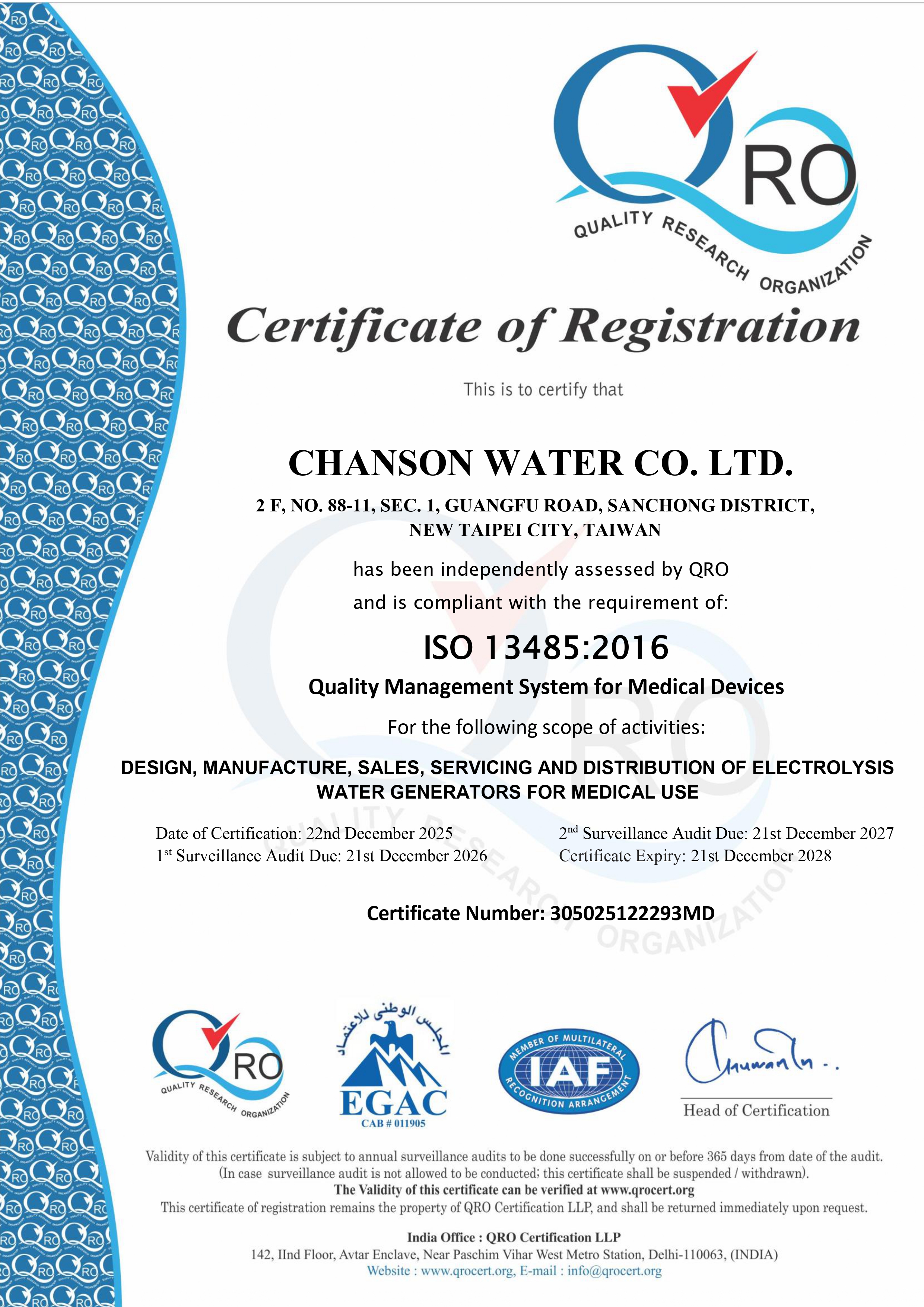
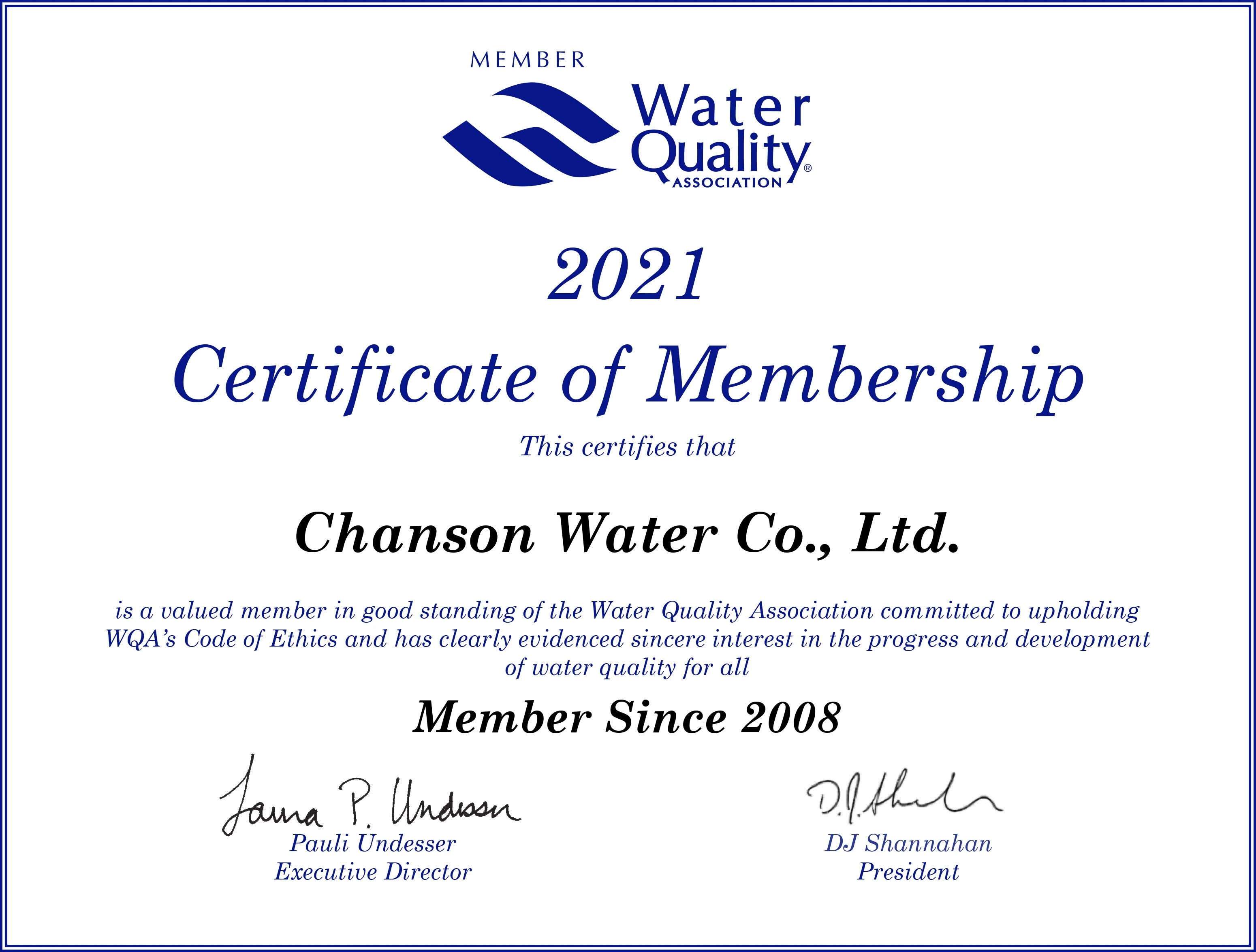
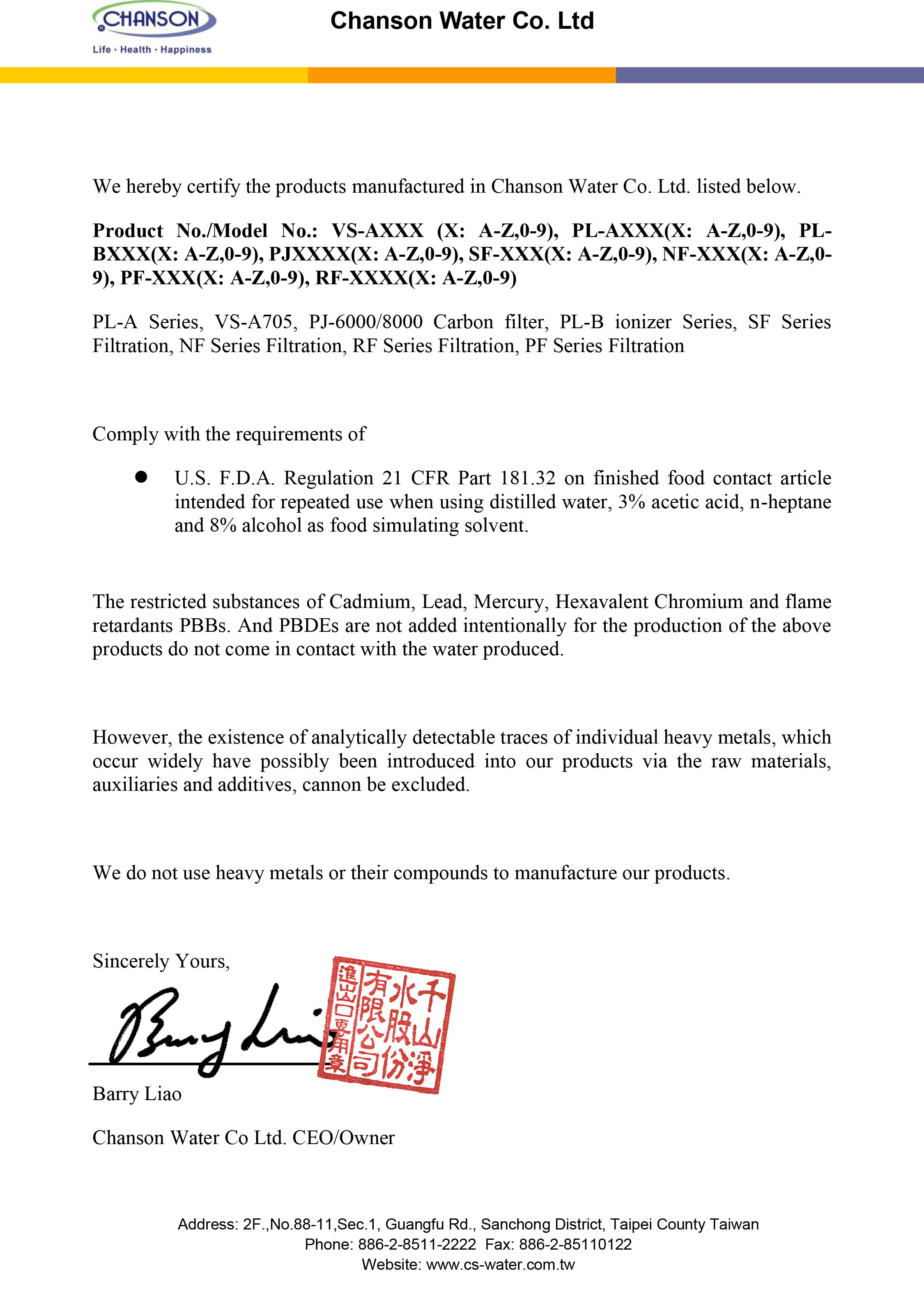
We walk you through what each of these means in plain language, so you can make an informed decision — not just a sales-driven one.
We Match the Right Model to Your Family's Needs
There's no one-size-fits-all machine. A single person has different requirements from a family of five. We carry the full range of Kangen water machines by Enagic — so you always get the right fit for your household:
Which model is right for you?
JR IV (4 plates) — Entry-level. Ideal for singles, couples, or first-time users wanting to experience ionized water without a large upfront investment.
SD 501 PL. / SD 501 DX (7 plates) — The most popular choice for Indian families. Delivers a wide pH range, strong negative ORP, and consistent daily performance.
K8 (8 plates) — Enhanced ionization for larger households or users who want maximum hydrogen output and antioxidant performance.
SUPER 501 (12 plates) — Professional-grade. Designed for high-usage environments, larger families, or wellness-focused households that want the absolute best.
ANESPA DX — Not a drinking water ionizer. This is a mineral ion water system for bathing — it transforms your shower or bath water to support skin health and relaxation.
Our team assesses your household size, daily water consumption, local water quality (TDS levels), and health goals — then recommends the model that genuinely fits your needs, not just the highest-priced option.
We Support You After the Purchase Too
A water ionizer is a 15–20 year investment. What happens after you buy matters just as much as the machine itself. Chanson Water provides:
Filter replacement reminders so your water quality never drops
Nationwide service support across Delhi NCR, Faridabad, Hyderabad, Gujarat, Maharashtra, Punjab, Rajasthan, Uttar Pradesh, Bihar, and more
Dedicated customer care for troubleshooting, maintenance, and queries
📞 Book a Free Home Demo
The best way to understand the difference is to see it in your own home. Our experts will visit, test your water, demonstrate the machine, and answer every question — with zero pressure to buy on the spot.
📞 Call: +91 7011271309 🌐 Visit: chansonqualitywater.com 📍 Serving: Delhi NCR | Faridabad | Hyderabad | Pan-India
9. Frequently Asked Questions (FAQs)
Q: Is Kangen water the same as alkaline water?
Not exactly. Kangen water is produced through electrolysis, giving it a negative ORP and high molecular hydrogen content — properties that chemically-alkalized water does not have.
How much does a Kangen water machine cost in India?
Chanson Water machines start from around ₹80,000 to ₹2.5 lakh — significantly more accessible than Enagic's branded machines (₹1.5 lakh to ₹5+ lakh), with superior ISO 13485 and WQA Gold Seal certifications.
Is it safe to drink Kangen water every day?
Yes, for most healthy adults at 2–3 liters per day. Those with kidney disease or pH-sensitive medications should consult a doctor. Use Clean Water (pH 7.0) when taking medications.
What is the difference between a Kangen water machine and a water purifier?
A standard purifier only removes contaminants. A Kangen water machine also restructures water through electrolysis — producing alkaline, antioxidant-rich water across 5 functional types from a single device.
Conclusion
A Kangen water machine is more than a purifier — it upgrades the quality of water your family drinks every day. The Kangen water machine benefits — from superior hydration and antioxidant protection to versatile household uses — make it a proactive investment in long-term health.
Chanson Water delivers world-class ionization technology, medical-grade certification, India-optimized performance, and accessible pricing — backed by nationwide service.
Ready to experience the difference? Book your free home demo today.
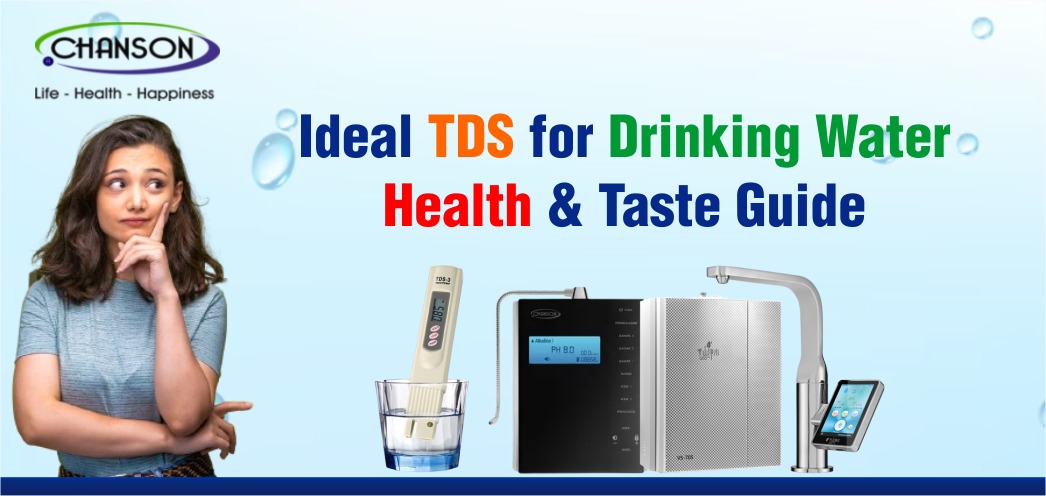
Understanding the quality of the water we drink is essential for maintaining good health. One key factor in water quality is TDS or Total Dissolved Solids. TDS refers to the combined content of all inorganic and organic substances contained in a liquid. This blog post aims to provide an in-depth look at the Ideal TDS for Drinking Water and how to maintain the ideal TDS levels for both health and taste.

Excerpt - Understanding the quality of drinking water is essential. Total Dissolved Solids (TDS) measure all inorganic and organic substances in water, affecting taste and health. The ideal TDS range is 50-150 ppm, ensuring balanced minerals and flavor. Regular testing helps maintain water quality and informs treatment decisions.
What is TDS?
TDS stands for Total Dissolved Solids, a measure of the dissolved combined content of all inorganic and organic substances present in water. These substances can include minerals, salts, and organic matter. TDS is usually measured in parts per million (ppm) and can be determined using a TDS meter or by analyzing water samples in a lab.
The components contributing to TDS can vary widely, including:
- Minerals: Calcium, magnesium, potassium, and sodium.
- Salts: Bicarbonates, chlorides, and sulfates.
- Organic Matter: Decomposing leaves, plant material, and industrial pollutants.
Importance of TDS in Drinking Water
The TDS level in drinking water can significantly impact both health and taste. High TDS levels can result in water that tastes salty, bitter, or metallic and can lead to health issues if certain harmful contaminants are present. Conversely, very low TDS levels can result in water that tastes flat and may lack essential minerals.
TDS also plays a crucial role in water purification and treatment processes. Understanding the TDS level of your water can help you determine the best treatment method, ensuring safe and pleasant drinking water.
Ideal TDS Range for Drinking Water
Health authorities like the World Health Organization (WHO) and the Environmental Protection Agency (EPA) recommend maintaining a TDS level in drinking water within the range of 50-150 ppm. Water in this range is generally considered to have the best taste and the right balance of essential minerals. However, the ideal TDS range can be influenced by factors such as geographic location and personal preference. Some regions naturally have higher or lower TDS levels due to the local water sources.
Benefits of Maintaining Ideal TDS Levels
- Improved Taste and Quality: Water with the right TDS levels has a more pleasant taste and better overall quality.
- Health Benefits: Proper TDS levels ensure that the water contains essential minerals, contributing to better hydration and overall health.
- Avoiding Risks: Balanced TDS levels help avoid the potential health risks associated with too high or too low TDS, such as kidney stones or lack of essential nutrients
How to Measure and Adjust TDS Levels
Measuring and adjusting TDS levels in your drinking water can be done with relative ease:
- Measurement Tools: Use a TDS meter to measure the TDS levels at home. These devices are affordable and provide quick results.
- Reducing High TDS: Techniques like Reverse Osmosis (RO) systems and water softeners are effective in reducing high TDS levels.
- Increasing Low TDS: To increase low TDS levels, you can add mineral cartridges to your water system, which help reintroduce essential minerals.
Common Misconceptions About TDS
- TDS and Water Hardness: TDS is often confused with water hardness, but they are not the same. Water hardness refers specifically to the concentration of calcium and magnesium, while TDS includes all dissolved substances
- High TDS Equals Contaminated Water: Not all high TDS levels indicate contamination. Some minerals that contribute to high TDS are beneficial to health
Case Studies and Real-Life Examples
Different regions have varying TDS levels due to their natural water sources. For example, areas with a lot of limestone may have higher TDS due to the presence of calcium. Understanding these variations can help local populations manage their water quality better and ensure safe drinking water.
Maintaining ideal TDS levels in drinking water is crucial for both health and taste. Regularly testing and monitoring your water's TDS levels can help you make informed decisions about water treatment and ensure that your drinking water is of the highest quality.
Additional Resources
- World Health Organization (WHO) Guidelines on Water Quality
- Environmental Protection Agency (EPA) Water Quality Standards
- Recommended water testing kits and purification systems are available from various online and local retailers
- For more information, contact water quality experts and services in your area
Experience the Benefits of Pure, Healthy Water with a Chanson Water Ionizer! Transform your tap water into alkaline, ionized water for better hydration and wellness. Shop now and elevate your water quality today!
Note - Add a Button with the text “Our Water Ionizers” and add a link to this button (https://chansonqualitywater.com/water-ionizer)
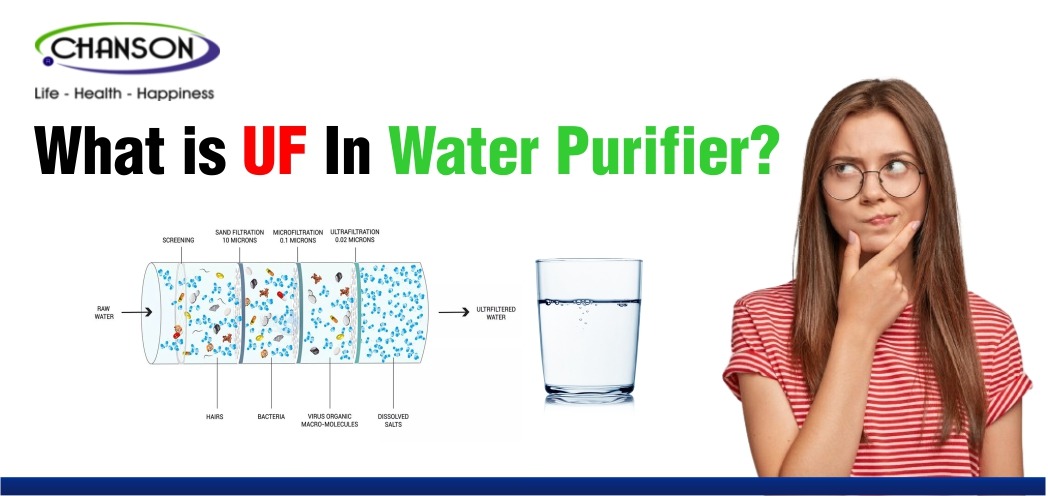
Water purifiers are essential for ensuring safe drinking water by removing impurities. Ultrafiltration (UF) is a key technology in this process, using a membrane to filter out particles as small as 0.01 microns. Unlike Reverse Osmosis (RO) which removes minerals, UF retains them, providing healthier water.

UF is effective against bacteria, viruses, and cysts, making it ideal for areas with unsafe water sources. Regular maintenance is crucial to ensure optimal performance. Overall, UF in water purifiers offers a reliable and eco-friendly solution for clean, safe drinking water. This article aims to provide a detail of What Is UF in Water Purifier?
What is UF In Water Purifier?
Ultrafiltration (UF) is a water purification technology used in water purifiers to remove impurities and contaminants from water. It works by using a semi-permeable membrane to filter out particles as small as 0.01 microns, including bacteria, viruses, and cysts, making the water safe for consumption. Unlike Reverse Osmosis (RO), which removes minerals along with impurities, UF retains essential minerals in the water, ensuring a healthier water composition. UF is particularly effective in areas with unsafe water sources, as it can remove harmful microorganisms. Regular maintenance is important to ensure the optimal performance of UF filters. Overall, UF in water purifiers provides a reliable and eco-friendly solution for clean and safe drinking water.
- Principle of Operation: UF uses a physical barrier (membrane) to separate particles from water based on size, while RO uses pressure to force water through a semipermeable membrane to remove impurities. UV, on the other hand, uses ultraviolet light to disinfect water by inactivating microorganisms.
- Particle Size Removal: UF can remove particles as small as 0.01 microns, including bacteria, viruses, and cysts. RO, however, can remove even smaller particles, down to 0.0001 microns, including dissolved salts and minerals. UV does not remove particles but inactivates microorganisms.
- Maintenance: UF systems generally require less maintenance compared to RO systems, which often require periodic filter changes and maintenance to prevent clogging. UV systems require periodic bulb replacement and cleaning of the UV chamber.
- Wastage: RO systems typically waste water during the purification process, with a ratio of purified to waste water ranging from 1:2 to 1:3. UF and UV systems do not produce wastewater during the purification process.
- Mineral Retention: UF retains essential minerals in water, unlike RO, which removes minerals along with impurities. UV does not alter the mineral composition of water.
- Suitability: UF is suitable for areas with unsafe water sources, as it can effectively remove harmful microorganisms. RO is suitable for areas with high Total Dissolved Solids (TDS) levels and poor water quality. UV is suitable for water with low levels of contamination and as a final polishing step in purification.
Advantages of UF in Water Purifiers
Ultrafiltration (UF) in water purifiers offers several advantages:
- Removal of Microorganisms: UF is highly effective in removing bacteria, viruses, and cysts from water, making it safe for consumption. The membrane used in UF has tiny pores that can filter out these microorganisms.
- Retention of Essential Minerals: Unlike Reverse Osmosis (RO), which removes essential minerals along with impurities, UF retains these minerals in the water. This ensures that the water remains healthy and nutritious.
- Environmentally Friendly: UF does not require electricity or chemicals for the purification process, making it an environmentally friendly option. It also does not produce wastewater, unlike RO, which wastes a significant amount of water during the purification process.
- Suitability for Unsafe Water Sources: UF is particularly useful in areas where the water source is microbiologically unsafe. It can effectively remove harmful microorganisms, providing safe drinking water.
- No Alteration of Water Composition: UF does not alter the composition of water, except for removing impurities. This means that the water retains its natural taste and properties.
- Low Maintenance: UF systems generally require less maintenance compared to RO systems. Regular cleaning of the membrane is necessary, but the frequency is lower than that of RO systems.
- Cost-Effective: UF systems are often more cost-effective than RO systems, both in terms of initial investment and ongoing maintenance costs
Overall, UF in water purifiers offers a reliable and efficient way to purify water, making it safe for consumption while retaining essential minerals and being environmentally friendly.
Limitations of UF
While Ultrafiltration (UF) is an effective water purification method, it does have some limitations:
- Does Not Remove Dissolved Impurities: UF is not effective in removing dissolved impurities such as salts and minerals from water. Therefore, it is recommended to use UF in conjunction with other purification methods if these impurities are a concern.
- Pre-filtration Required in Areas with High Turbidity: In areas with high turbidity (cloudiness caused by suspended particles), pre-filtration may be necessary to prevent clogging of the UF membrane. This can add complexity and cost to the purification system.
- Limited Size Exclusion: While UF can filter out particles as small as 0.01 microns, it may not be effective against all types of contaminants. Some viruses and dissolved organic compounds may pass through the UF membrane, although the risk is generally low.
- Maintenance Requirements: While UF systems generally require less maintenance than Reverse Osmosis (RO) systems, regular maintenance is still necessary to ensure optimal performance. This includes cleaning the membrane and replacing filters as needed.
- Limited Effectiveness Against Chemical Contaminants: UF is primarily effective against physical contaminants such as bacteria, viruses, and cysts. It may not be as effective against chemical contaminants, which may require additional treatment methods.
- Initial Cost: While UF systems are generally more cost-effective than RO systems, they still involve an initial investment. The cost of the UF membrane and other components can vary depending on the system's size and complexity
Despite these limitations, UF remains a valuable water purification method, particularly in areas where microbiological contamination is a primary concern. By understanding these limitations and implementing proper maintenance and pre-filtration measures, the effectiveness of UF systems can be maximized.
Maintenance and Cleaning of UF Filters
Proper maintenance and cleaning of Ultrafiltration (UF) filters are essential to ensure their optimal performance and longevity. Here are some tips for maintaining and cleaning UF filters:
- Regular Cleaning: UF filters should be cleaned regularly to prevent the buildup of contaminants and to maintain their effectiveness. The frequency of cleaning will depend on the quality of the water being filtered and the manufacturer's recommendations
- Use of Cleaning Solutions: Use a suitable cleaning solution recommended by the manufacturer to clean the UF filters. Follow the manufacturer's instructions carefully to ensure proper cleaning and avoid damaging the filters
- Backwashing: Backwashing is a common cleaning method for UF filters. It involves reversing the flow of water through the filter to flush out accumulated particles and contaminants. This helps to restore the filter's flow rate and efficiency
- Chemical Cleaning: In some cases, chemical cleaning may be necessary to remove stubborn deposits and contaminants from UF filters. Use only the chemicals recommended by the manufacturer and follow the instructions carefully to avoid damaging the filters
- Replacement of Filters: UF filters have a limited lifespan and will eventually need to be replaced. Regularly check the condition of the filters and replace them as recommended by the manufacturer to maintain optimal performance
- Preventative Maintenance: In addition to regular cleaning, it's important to perform routine maintenance checks on the UF system. This includes checking for leaks, monitoring the flow rate, and ensuring that all components are functioning properly
- Professional Maintenance: For complex UF systems or if you're unsure about the maintenance procedures, it's advisable to seek professional maintenance services. Professional technicians can ensure that the filters are properly cleaned and maintained, maximizing their lifespan and performance
By following these maintenance and cleaning tips, you can ensure that your UF filters perform efficiently and provide you with clean, safe drinking water for years to come.
UF technology in water purifiers offers an effective and environmentally friendly way to ensure safe drinking water. Its ability to remove harmful microorganisms while retaining essential minerals makes it a popular choice for households and industries alike. Consider UF technology for your water purification needs and enjoy clean and safe drinking water for you and your family.
Experience the difference of ionized water in your daily life! Invest in a water ionizer today and enjoy the benefits of drinking alkaline water, antioxidant-rich water. Say goodbye to bottled water and hello to a sustainable, healthy hydration solution. Take the first step towards a healthier lifestyle and discover the power of ionized water. Order your water ionizer now and start enjoying the benefits!
Call to Action - Visit Our Water Ionizers https://chansonqualitywater.com/water-ionizer

All Rights Reserved. © 2019-2026, Centrepoint Lifestyle Products Pvt Ltd.
