By the Chanson Water India team · Reviewed by Manoj Jain · Published 24 Nov 2026
Quick answer
Many housing societies in Gurugram, Faridabad, Noida and Greater Noida get part of their supply from borewells or tankers, and this water is often hard. You can spot it from white scale on taps and showerheads, soap that does not lather and spots on glass and tiles. The lasting fix for a flat is a unit on the main inlet or bathroom line: either a salt-based water softener or a salt-free water conditioner that reduces scale. For drinking water, use a purifier, because neither of these removes dissolved salts.
Why flats in Delhi NCR often get hard water
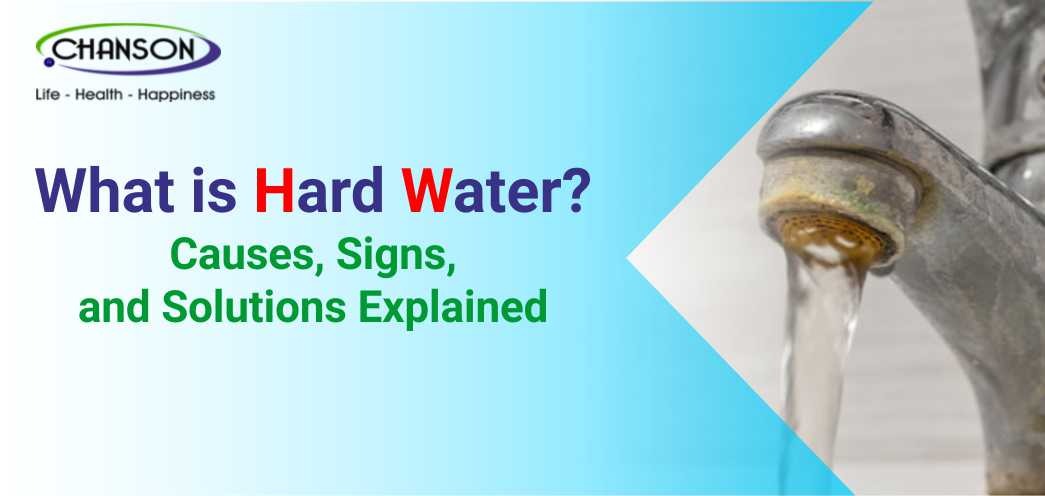
Hard water carries a lot of dissolved calcium and magnesium. In many parts of Haryana and the wider NCR, groundwater picks up these minerals as it passes through the soil and rock. Societies that top up municipal supply with borewell or tanker water often see hardness rise, especially in summer when tanker use goes up.
The Indian drinking water standard, BIS IS 10500:2012, puts the acceptable limit for total hardness at 200 mg/L (as calcium carbonate). It allows up to 600 mg/L only when no other source is available. Readings above 200 mg/L are common in borewell water across the region.
Signs your flat has hard water
- White crust on taps and showerheads, and showers that lose pressure over time.
- Soap and shampoo do not lather well, so you end up using more.
- White spots on glass partitions, tiles and steel utensils after they dry.
- Geysers and kettles scale up and need descaling more often.
- Clothes feel stiff and whites turn dull after a few washes.
- Many people say their hair feels rough after washing with hard water.
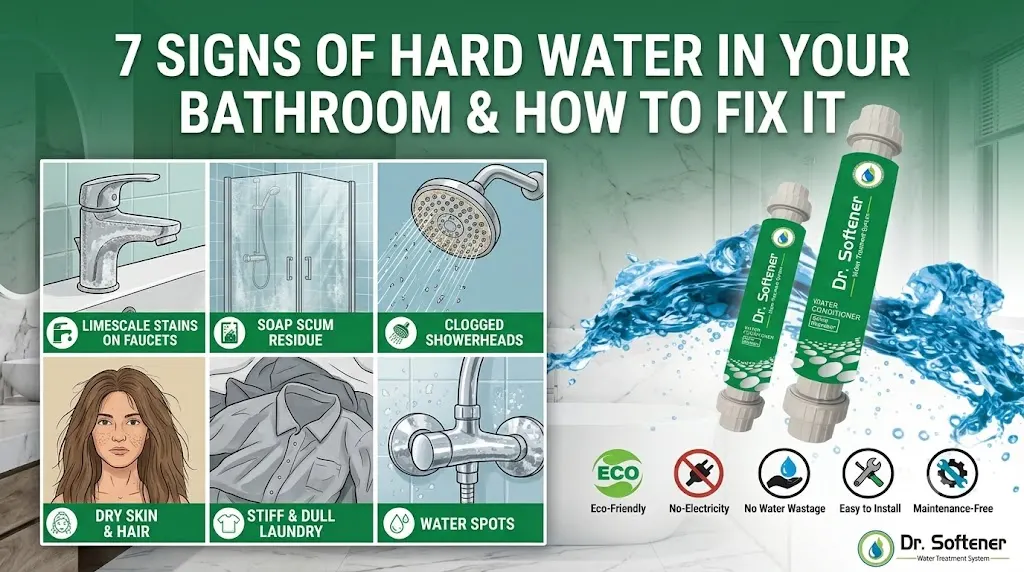
Not sure? Read 7 signs of hard water in your bathroom.
How to check your water
A TDS meter is useful, but it shows all dissolved solids, not hardness. To know your hardness level, use hardness test strips or a simple drop-test kit, or get a lab test. Test water from the tap you use for bathing, because that is where hardness causes the most trouble. If several flats in your tower have the same problem, ask your RWA or facility team whether the society already has a water test report.
Ways to fix hard water in a flat
1. Salt-based water softener (removes hardness)
A salt-based softener uses ion exchange: resin beads swap calcium and magnesium for sodium, so the water that reaches your taps and geyser is truly soft. It works well on very hard water, but in a flat it needs floor space, a power point, a drain for the regeneration water, and salt topped up every few weeks.
2. Salt-free water conditioner (reduces scale, easy for flats)
A salt-free conditioner does not remove the minerals. Instead, it changes how calcium and magnesium behave so they are less likely to stick to surfaces as hard white scale. It needs no salt, no electricity and no drain, so it is easy to fit on a flat's inlet line. Results depend on how hard your water is and on your flow, so get your water checked first.
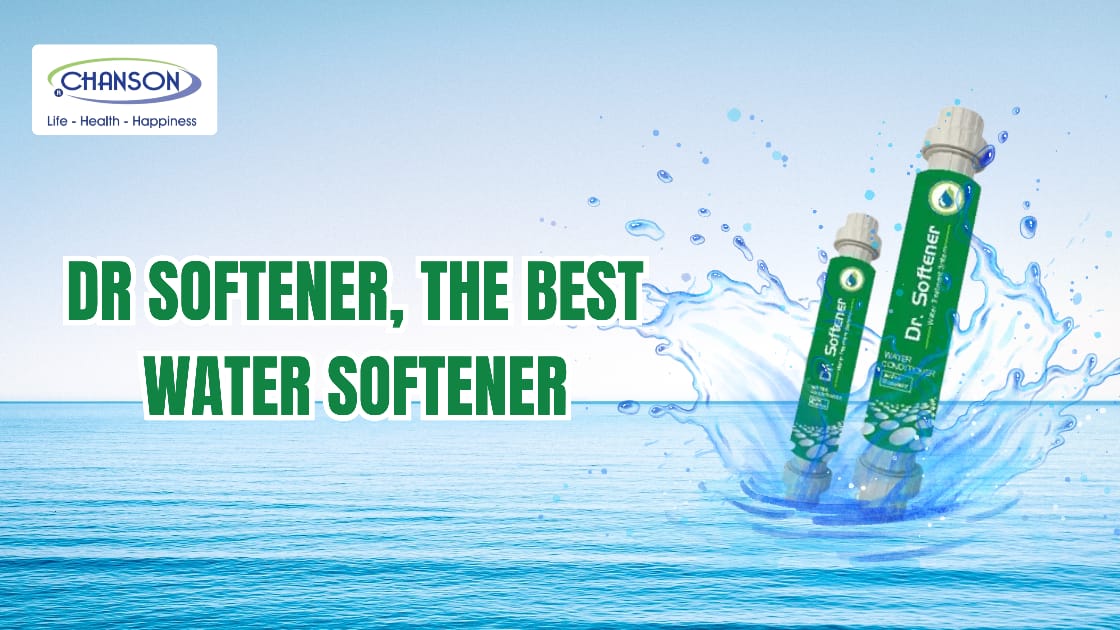
We supply and install Dr. Softener for apartments, a salt-free conditioner that fits on your flat's main inlet, so every bathroom and kitchen tap is covered. If one bathroom has the worst scale, the bathroom model treats just that line.
3. Shower filters (quick, but limited)
Small shower filters are cheap and easy to fit. Most of them mainly reduce chlorine and do little against hardness, and the cartridges run out fast with hard borewell water. They can help with smell and feel, but they do not stop scale in your geyser or on tiles.
4. A society-level softening plant
If the whole society has hard water, a central softening plant run by the RWA treats water for every flat. It is the best long-term answer, but it needs a society decision, budget and regular maintenance. Until then, a unit for your own flat protects your bathroom fittings and geyser.
5. Clean the scale you already have
Soak showerheads and aerators in diluted white vinegar or a citric acid solution for a few hours, then scrub and rinse. Descale geysers as the maker recommends. This removes existing scale, but it will come back unless the water is treated. For more home options, see 10 natural ways to soften hard water at home.
What about drinking water?
Softeners and conditioners are for bathing, washing and protecting appliances. They do not lower TDS or remove contaminants, and a salt-based softener adds a little sodium. For drinking and cooking, keep using a purifier such as RO where TDS is high. If you use a water ionizer, it should be fed with water that is already within a normal drinking range.
Choosing the right size
The size you need depends on how many people live in the flat, how many bathrooms you have and how hard your water is. A 2 or 3 BHK family usually needs a compact domestic unit, and the choice between salt-based and salt-free depends on how hard your water is. Read what size water softener do I need before you buy, or ask us to check it at your home.
Free home demo in Delhi NCR
Chanson Water India has offices in Delhi (Netaji Subhash Place) and Faridabad (Crown Plaza Mall, Sector 15A). We can test your water, suggest the right option for your flat, and install it free of charge. Call or WhatsApp +91 70112 71309 or book a free demo.
Frequently asked questions
Can I install one in a rented flat?
Usually yes. A compact unit connects to the existing line and can be removed when you move. Check with your landlord first.
Salt-based softener or salt-free conditioner: which is better?
A salt-based softener actually removes hardness and suits very hard water, but needs salt, power and a drain. A salt-free conditioner is easier to live with in a flat and is designed to reduce scale, but it does not remove the minerals. A water test helps you decide.
Is softened water safe to drink?
Water from a salt-based softener has slightly more sodium than the water that went in. A salt-free conditioner adds no salt. Most families use it for bathing and washing, and use a purifier for drinking water.
Does a water softener reduce TDS?
No. A salt-based softener swaps hardness minerals for sodium, and a salt-free conditioner leaves the minerals in, so the TDS reading stays about the same. RO is the usual way to lower high TDS for drinking.
How often do I need to add salt?
Only salt-based softeners need salt. It depends on how hard your water is and how much you use; in many homes it is every few weeks. A salt-free conditioner needs no salt.
Sources
- Bureau of Indian Standards, IS 10500:2012 Drinking Water – Specification.
- Central Ground Water Board (CGWB), groundwater quality reports for Haryana and the NCT of Delhi.
Written by the Chanson Water India product team. Reviewed by Manoj Jain, Chanson Water India. Last reviewed: 24 November 2026.
Have a question about your water?
Call or WhatsApp +91 70112 71309 — or book a free home demo with our team.
Related articles
-
27 Oct 2026
7 Signs of Hard Water in Your Bathroom and How to Fix It -
-opt.webp)
25 Apr 2026
Water Softener vs Water Filter: What's the Difference? -
21 Apr 2026
Best Water Softener for Homes & Apartments in 2026 (Complete Buying Guide) -
03 Jun 2025
Dr. Softener: How a Salt-Free Water Conditioner Works -
20 Nov 2024
What is Hard Water? Understanding Its Impact and Solutions -
04 Aug 2024
What Size Water Softener Do I Need? A Comprehensive Guide

All Rights Reserved. © 2019-2026, Centrepoint Lifestyle Products Pvt Ltd.
