.png)
Water Softener vs Water Filter: What's the Difference?
If you have been researching ways to improve your home's
water quality, you've likely come across two terms: water softener
and water filter. While both systems enhance water quality, they solve
completely different problems. This guide breaks down the water softener vs
water filter debate clearly so Indian homeowners can make the right decision
for their needs and budget.
What is a Water Filter?
A water filter is a device that removes contaminants,
chemicals, and harmful impurities from water to make it safer and
better-tasting for drinking, cooking, and bathing. Water filtration systems
work by passing water through one or more physical or chemical filtration
stages that trap or neutralise unwanted substances.
Common types of water filters include:
- Activated
carbon filters: Remove chlorine, odour, VOCs, and organic chemicals
- Reverse
osmosis (RO) systems: Remove heavy metals, TDS, bacteria, and dissolved
salts
- UV
filters: Use ultraviolet light to kill bacteria, viruses, and
microorganisms
- Sediment
filters: Trap rust, sand, and suspended particles
What Does a Water Filter Remove?
A quality water filter addresses a wide spectrum of
contaminants that are commonly found in Indian municipal and borewell water
supplies:
- Chlorine
and chloramine — added during municipal treatment but harmful in high
doses
- Sediment,
rust, and sand — common in older piping systems
- Heavy
metals such as lead, arsenic, and fluoride — prevalent in borewell water
across many Indian states
- Bacteria,
viruses, and cysts — critical to remove in areas with untreated water
supply
- Pesticides,
herbicides, and industrial chemicals — increasingly found in groundwater
Water filters are designed primarily to make your water safe
to drink. They do not soften hard water or remove hardness minerals like
calcium and magnesium.
What is a Water Softener?
A water softener is a system specifically designed to remove
hardness-causing minerals — primarily calcium (Ca²⁺) and magnesium (Mg²⁺) —
from water. Hard water is a widespread issue across India, particularly in
cities like Delhi,
Bengaluru, Chennai, Jaipur, and Ahmedabad where TDS and hardness levels
routinely exceed 500 mg/L.
Water softeners do not filter contaminants. Their sole
function is to convert hard water into soft water by replacing calcium and
magnesium ions with sodium or potassium ions, a process known as ion exchange.
How Do Water Softeners Work?
- Water
softeners use ion-exchange resin beads inside a tank
- Hard
water passes through the tank, where calcium & magnesium ions are
trapped
- Resin
beads release sodium ions in exchange, softening the water
- Over
time, resin gets saturated with hardness minerals
- Regeneration
is needed using a salt brine solution
- Salt-free
conditioners don’t remove minerals, they alter their structure
- This
prevents scale buildup in pipes and appliances
- Salt-free
systems are low-maintenance and suitable for many Indian homes
What Are the Main Differences Between a Water Softener and a Water Filter?
Understanding the core difference between a water filter and
a water softener will help you choose the right system — or understand why you
may need both.
Side-by-Side Comparison Table
|
Feature |
Water
Filter |
Water
Softener |
|
Primary
Purpose |
Removes
contaminants & impurities |
Removes
hardness minerals (Ca, Mg) |
|
Improves
Taste & Odour |
Yes |
No |
|
Prevents
Limescale |
No |
Yes |
|
Removes
Chlorine |
Yes |
No |
|
Removes
Heavy Metals |
Yes
(RO/carbon) |
No |
|
Safe
for Drinking |
Yes —
designed for it |
Not
recommended alone |
|
Protects
Appliances |
Limited |
Strong
protection |
|
Removes
Bacteria/Viruses |
Yes
(UV/RO) |
No |
|
Maintenance |
Filter
replacement (3–6 months) |
Salt
refilling (monthly) |
|
Best
For |
Contaminated
water |
Hard
water problems |
Which is Better: Water Softener or Water Filter?
Direct answer: Neither is universally better — the right
system depends entirely on your specific water problem. If your primary concern
is drinking safe water free from chemicals, heavy metals, and bacteria, a water
filter is the better choice. If your main issue is hard water causing scale
buildup, damaging appliances, rough skin, and hair fall, a water softener
addresses those problems directly.
In most Indian homes, both problems coexist, high TDS, hard
water, and contamination. That is why water quality experts typically recommend
using a water softener and water filter together for complete protection.
Is a Water Filter or Water Softener Better for Home Use?
- For
everyday home use in India, a water filter is essential for safe drinking
water
- A water
softener for home becomes necessary if your area has hard water
- Hard
water is typically indicated by TDS above 300 ppm or hardness above 150
mg/L
- A
water filter removes impurities, bacteria, and contaminants from drinking
water
- A
water softener reduces calcium and magnesium to prevent scaling and damage
- Cities
like Delhi NCR and Bengaluru often require both systems
- Using
a filter and softener together ensures safe water and protects appliances
- Combining
both systems is the best solution for complete home water treatment
How to Choose Based on Your Water Problem
- Yellowing
utensils, scale on taps, rough laundry → Water Softener
- Foul
odour, chlorine taste, unsafe for drinking → Water Filter
- Hair
fall, dry skin, frequent skin issues from bathing → Water Softener
- Presence
of lead, fluoride, arsenic in borewell water → Water Filter (RO)
- Both
scale buildup AND contamination concerns → Both systems together
When Do You Need Both a Water Softener and a Water Filter?
You need both systems when your water supply has high
hardness AND contains contaminants. This scenario is extremely common in Indian
cities. Hard water does not mean contaminated water, and filtered water is not
necessarily soft water. A combination setup — where the softener handles
hardness first and the filter removes chemicals and pathogens — gives you the
best of both worlds: water that is safe to drink and gentle on your home.
Benefits of Using a Water Filter
- How
a Water Filter Improves Taste and Removes Odour.
Chlorine, added by municipal corporations to disinfect
water, often leaves behind a strong chemical smell and taste. Activated carbon
filters inside water filtration systems adsorb chlorine and chloramines
effectively, leaving water that tastes clean and fresh. This is especially
noticeable when making tea, coffee, or drinking water directly.
2. Does a Water Filter Remove Harmful
Chemicals and Contaminants?
Yes. A multi-stage water filter — particularly one with RO
membrane and activated carbon — is highly effective at removing dissolved heavy
metals like lead and arsenic, pesticide residues, pharmaceutical traces, and
industrial runoff chemicals. In India, where groundwater contamination is a
documented public health concern in states like Punjab, Rajasthan, and West
Bengal, having a proper water filter is essential.
3. Why Water Filters Are Essential for Safe
Drinking Water.
Water softeners do not remove contaminants. A home relying
solely on a water softener for drinking water may still be consuming lead,
nitrates, pesticides, or bacteria. A water filter is the foundation of safe
drinking water in any Indian household, regardless of whether you also use a
softener.
Benefits of Using a Water Softener
- How
a Water Softener Prevents Limescale Buildup in Your Home.
Hard water leaves white, chalky deposits (limescale) on
taps, showerheads, pipes, and heating elements. Over time, these deposits
restrict water flow and reduce efficiency. A water softener eliminates this
problem at the source by removing hardness minerals before they enter your
plumbing — resulting in cleaner fixtures and lower maintenance costs.
2. Can a Water Softener Extend the Life of
Appliances?
Yes — significantly. Geysers, washing machines, dishwashers,
and RO systems all work harder and wear out faster when hard water runs through
them. Studies show that hard water can reduce geyser efficiency by up to 30%
and shorten appliance lifespan considerably. A water softener protects these
investments directly, often paying for itself within 2–3 years through reduced
repair and energy bills.
3. Why Soft Water is Better for Your Skin, Hair, and Daily Use.
Hard water is a leading but overlooked cause of dry skin,
itchy scalp, and hair fall in India. The mineral ions in hard water interfere
with soap lathering, leave residue on skin and hair, and disrupt the natural pH
balance. Soft water allows shampoos and soaps to lather properly, rinses off
cleanly, and leaves skin feeling noticeably smoother. Many dermatologists in
India now recommend water softeners for patients experiencing chronic dry skin
and hair thinning.
Water Filter vs Water Softener: Which One Do You Need?
Choosing between a water filter and a water softener for
home depends on your water quality and daily usage needs. In India, many
households face both contamination and hard water issues, making it important
to understand the difference. A water filter ensures safe and clean drinking
water, while a water softener protects your plumbing, appliances, and skin from
the effects of hard water.
Choose a Water Filter If:
- Your
water has a strong chlorine taste or smell
- You
are concerned about lead, arsenic, fluoride, or bacteria
- You
rely on borewell or municipal water for drinking
- You
want safe, clean drinking water throughout your home
- Your
TDS is very high and water tastes bitter or metallic
Explore More: Water Filter
Choose a Water Softener If:
- You
have visible limescale buildup on taps, tiles, and appliances
- Your
soap does not lather easily
- Your
geysers or washing machines are frequently serviced
- You
experience dry skin, hair fall, or rough laundry
- Your
water hardness is above 150–200 mg/L (as CaCO₃)
Explore More: Water Softener
When You Need Both
- If
you live in cities like Delhi NCR or Bengaluru, you may need both systems
- Hard
water + contamination risks are common in Indian households
- Ideal
setup: Water Softener (whole-house) → Water Filter/RO (drinking use)
- This
combination protects plumbing from scale and ensures safe drinking water
- Using
both systems gives complete water treatment for your home
Do I Need a Water Softener or Water Filter for My Home's Water Quality?
Check Your Water Quality First
Before purchasing any system, test your water. Most water
testing labs and online services in India offer affordable TDS and hardness
tests. A TDS above 300 ppm suggests filtration may be needed; hardness above
150 mg/L (CaCO₃) typically warrants a softener. Many Chanson Quality Water
dealers offer free or subsidised water testing to help homeowners identify the
right solution.
Consider Installation Type
Whole-house systems treat all water entering your home —
ideal for softeners. Point-of-use systems (under-sink or countertop filters)
treat water at a single tap — ideal for drinking water filtration. Many Indian
households use a whole-house softener paired with a point-of-use RO or alkaline
ionizer for drinking water, combining the best of both technologies.
Maintenance and Cost Considerations
Water filters require periodic cartridge or membrane
replacement (typically every 3–12 months depending on usage and water quality).
Water softeners need regular salt refilling and occasional resin cleaning. For
Indian households, annual maintenance costs for a quality water filter
range from ₹88,000 to ₹2,65,000, while softener maintenance depends
largely on salt consumption based on water hardness and daily usage.
Final Verdict: Water Softener vs Water Filter
A water softener and a water filter are not competing
products — they are complementary solutions that solve different problems. A
water filter makes your drinking water safe by removing contaminants,
chemicals, and pathogens. A water softener protects your home by eliminating
hardness minerals that damage appliances, pipes, skin, and hair. For most
Indian households dealing with both hard water and contamination concerns, the
smartest investment is a combined water softener and filtration system.
Not sure what your water needs? Start by testing your water supply for TDS, hardness, and contaminants — then choose the right solution for your home. Explore Chanson Quality Water's range of water softeners and alkaline ionizers to find a system engineered for India's unique water challenges.
— Reviewed and written based on water quality expertise and India-specific water conditions.
Latest Blog
-
21 Sep 2026
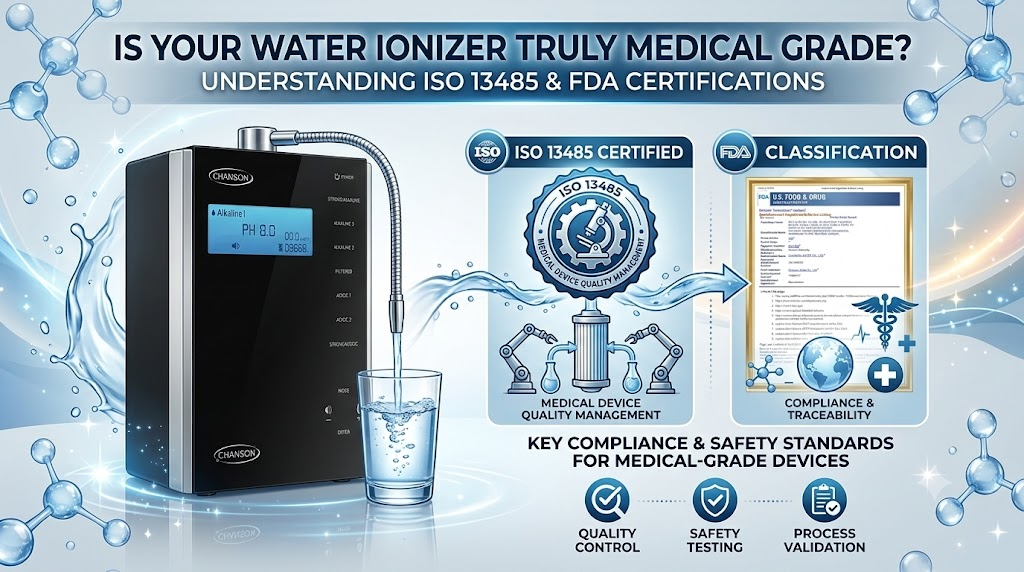
Is Your Water Ionizer Truly Medical Grade? (ISO 13485 & FDA Explained) -
14 Sep 2026
The Truth About Water Ionizer Prices: MLM Markups vs. Direct-to-Consumer -
29 Aug 2026
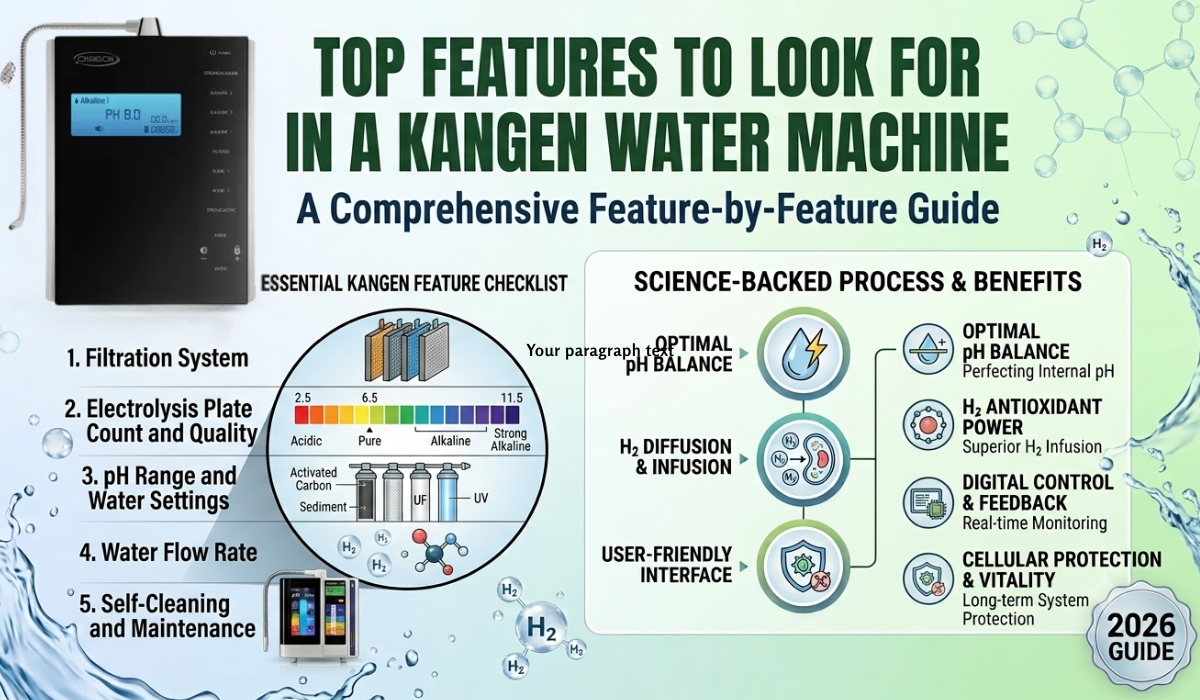
Top Features to Look for in a Kangen Water Machine -
16 Aug 2026
Best Water Ionizers With Low Maintenance Cost in India 2026 -
04 Jul 2026
Kangen Water Machine Price in India (2026): Model-Wise Price List, Features & Affordable Alternatives -
20 Jun 2026
How Does a Hydrogen Water Bottle Generator Work? A Complete Beginner's Guide -
16 May 2026
What Are the Health Benefits of Using a Kangen Water Machine?

All Rights Reserved. © 2019-2026, Centrepoint Lifestyle Products Pvt Ltd.
